

Client engagement check-ins are defined as brief, structured touchpoints between a coach and client that monitor progress, reinforce accountability, and sustain motivation between sessions. The role of check-ins in client engagement goes far beyond a simple status update. A meta-analysis of 138 studies involving roughly 20,000 people confirmed that regular progress monitoring is a primary driver of goal attainment. The International Coaching Federation (ICF) also identifies co-created accountability as a core competency, meaning check-ins are not optional add-ons. They are the backbone of an effective coaching practice.
What measurable benefits do client engagement check-ins provide?
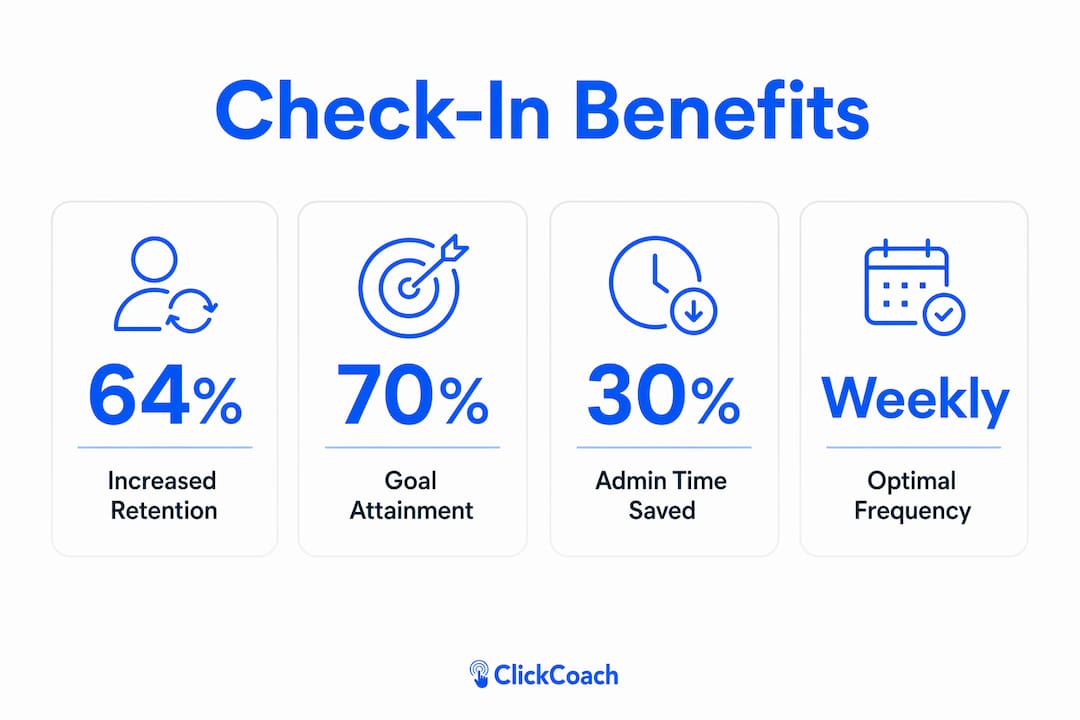
Regular check-ins produce outcomes that go well beyond keeping clients on track. Weekly check-ins deliver four distinct benefits: accountability, early problem detection, better programming data, and stronger client loyalty. Each benefit compounds over time, making the check-in habit one of the highest-return practices a coach can build.
The retention impact alone justifies the effort. Structured check-ins during the first 90 days significantly increase client retention by making clients feel seen and accountable. That first 90-day window is when most clients quietly disengage, so consistent contact during that period directly reduces churn.
Check-ins also give coaches early warning signals before a client cancels. Monitoring soft markers like energy, motivation, and adherence in the weeks before a cancellation allows coaches to intervene proactively. Proactive retention is consistently more effective than reactive re-engagement after a client has already mentally checked out.
The most effective check-ins are concise. Research supports keeping them under two minutes and covering four specific markers:
- Adherence: Did the client follow through on commitments?
- Energy levels: Is the client physically and mentally resourced?
- Sleep quality: Are recovery patterns supporting performance?
- Reflection: What did the client notice or learn this week?
“Weekly check-ins are one of the most underrated tools in a coach’s practice. They provide accountability, early problem detection, better programming data, and client loyalty — all from a two-minute touchpoint.”
Pro Tip: Track check-in responses over three or more weeks before adjusting a client’s program. Single-week dips are noise. Multi-week trends are signals.
How can coaches design effective client check-in systems?
The best check-in systems put clients in the driver’s seat. The ICF’s co-created accountability model holds that clients who own their progress tracking develop intrinsic motivation, which lasts far longer than external pressure from a coach. Your job is to build the structure, then step back and let the client fill it.
A well-designed system follows a clear sequence:
- Co-create the check-in format with the client. Ask what markers feel meaningful to them. A client focused on business growth tracks different metrics than one working on health habits.
- Set a fixed submission day and time. Consistency removes friction. Monday mornings work well because they capture weekend reflection and set the week’s tone.
- Keep the form short. Three to five questions maximum. Longer forms get abandoned.
- Build in a response protocol. Decide in advance when you will reply and what a “flag” looks like. This prevents ad hoc messaging that drains your time.
- Review in batches, not one by one. Batch reviewing check-ins enables coaches to spot client-wide trends and respond efficiently rather than reacting to each submission in isolation.
The written commitment element matters more than most coaches realize. Clients who write down goals and send weekly progress reports achieve their goals at a 76% rate, compared to 43% for those who only think about their intentions. That 33-percentage-point gap is the measurable value of a structured check-in form.
Pro Tip: Batch your check-in reviews into one 30-minute block each week. Batch review can reduce coach admin time by 60%, and reviewing all clients together sharpens your ability to spot patterns across your entire roster.
Frequency matters, but it does not need to be daily. Weekly check-ins hit the right balance for most coaching relationships. They are frequent enough to catch problems early and infrequent enough to respect the client’s autonomy. For clients in intensive programs or early onboarding, a brief mid-week pulse check can supplement the weekly form without adding significant burden.

What role does automation play in client check-ins?
Automation does not remove the human element from coaching. It protects it. When routine data collection runs on autopilot, coaches can spend their focused energy on interpretation and personalized response rather than chasing submissions.
Automation flags low compliance or motivation, allowing coaches to dedicate their attention to personalized strategy where it counts most. A coach who manually follows up on every missed check-in burns out quickly. A coach whose system automatically flags a client who has submitted low-energy scores for two consecutive weeks can respond with precision and care.
Practical automation elements that preserve the human connection include:
- Automated submission reminders sent 24 hours before the check-in deadline.
- Threshold alerts that notify the coach when a client scores below a set level on motivation or adherence.
- Pre-written response templates for common patterns, personalized with one or two specific observations before sending.
- Progress summaries auto-generated from check-in data so clients can see their own trends without waiting for a session.
The key distinction is between automating the collection of data and automating the response to it. Collect automatically. Respond personally. That combination scales your practice without making clients feel like they are interacting with a system instead of a coach.
Pro Tip: Use self-monitoring tools that give clients visibility into their own data. Research on professional coaching outcomes shows that visual self-monitoring increases client ownership and reduces dependence on coach-driven motivation.
How do you interpret check-in data to improve outcomes?
Reading check-in data well is a skill that separates good coaches from great ones. The numbers tell part of the story. The soft signals tell the rest.
Soft data includes how a client phrases their responses, what they omit, and whether their tone shifts over time. A client who writes “fine” for three weeks straight is not fine. A client who suddenly stops elaborating on their reflection question may be losing confidence. These patterns appear in check-in data weeks before a cancellation conversation happens.
The Co-Active model offers a practical framework for responding to missed commitments. Treating misses as data rather than failures and responding with curiosity and empathy keeps the coaching relationship intact. The approach is sometimes called the “empathy sandwich”: acknowledge the difficulty, ask a curious question, then reconnect to the client’s stated goal.
The table below maps common check-in indicators to appropriate coach responses:
| Check-in indicator | Appropriate coach response |
|---|---|
| Low adherence, high energy | Explore whether the goal still fits the client’s current priorities |
| Low energy, low sleep | Adjust program intensity; address recovery before adding new commitments |
| High adherence, low motivation | Reconnect the client to their “why”; celebrate progress explicitly |
| Missed submission | Send a brief, warm check-in message; avoid accusatory language |
| Consistently high scores | Raise the challenge level; acknowledge the client’s growth directly |
Pro Tip: Flag any client who misses two consecutive check-ins. Early disengagement signals are most actionable in the first 90 days. A short personal message at week two of silence costs you five minutes and can save a client relationship.
Adjusting programming based on check-in data also builds trust. When a client reports three weeks of poor sleep and you modify their workload accordingly, they feel heard. That responsiveness is one of the strongest drivers of long-term client loyalty.
Key Takeaways
Regular, well-designed check-ins are the single most effective tool coaches have for sustaining client engagement, detecting disengagement early, and driving measurable goal achievement.
| Point | Details |
|---|---|
| Check-ins drive goal attainment | A meta-analysis of 138 studies confirms progress monitoring is a primary driver of goal achievement. |
| First 90 days are critical | Structured check-ins during onboarding reduce early churn by making clients feel seen and accountable. |
| Written commitments raise success rates | Clients who write goals and submit weekly reports achieve them at a 76% rate versus 43% for intention only. |
| Batch review saves significant time | Reviewing all check-ins in one block can cut coach admin time by 60% and improves pattern recognition. |
| Automate collection, personalize responses | Use automation for reminders and flags, then respond personally to preserve the human coaching relationship. |
Why I think most coaches are using check-ins wrong
Most coaches treat check-ins as a reporting tool. They ask clients what they did, note the answers, and move on. That approach misses the real value entirely.
The most powerful function of a check-in is not data collection. It is the signal it sends to the client: “Your progress matters to me between our sessions, not just during them.” That signal builds trust faster than any technique I have seen. Clients who feel consistently seen are the ones who stay, refer others, and do the real work.
The pitfall I see most often is coaches who over-remind and under-respond. They send three follow-up messages when a client misses a check-in, then give a one-line reply when the client actually submits. That ratio is backwards. Respond thoughtfully when clients show up. Keep the follow-up for genuine disengagement flags, not routine tardiness.
The Co-Active model’s guidance on treating misses with curiosity rather than judgment changed how I approach low-compliance weeks. A missed check-in is information. It is not a character flaw. Coaches who respond from that mindset build clients who feel safe being honest, and honest clients give you the data you actually need to help them.
The goal is not to become the homework police. It is to build a system where clients hold themselves accountable and come to you for strategy, not permission.
— Mitch
How ClickCoach supports your check-in practice
ClickCoach brings session management, client progress tracking, homework assignments, and billing under one login, so you stop losing time switching between apps.
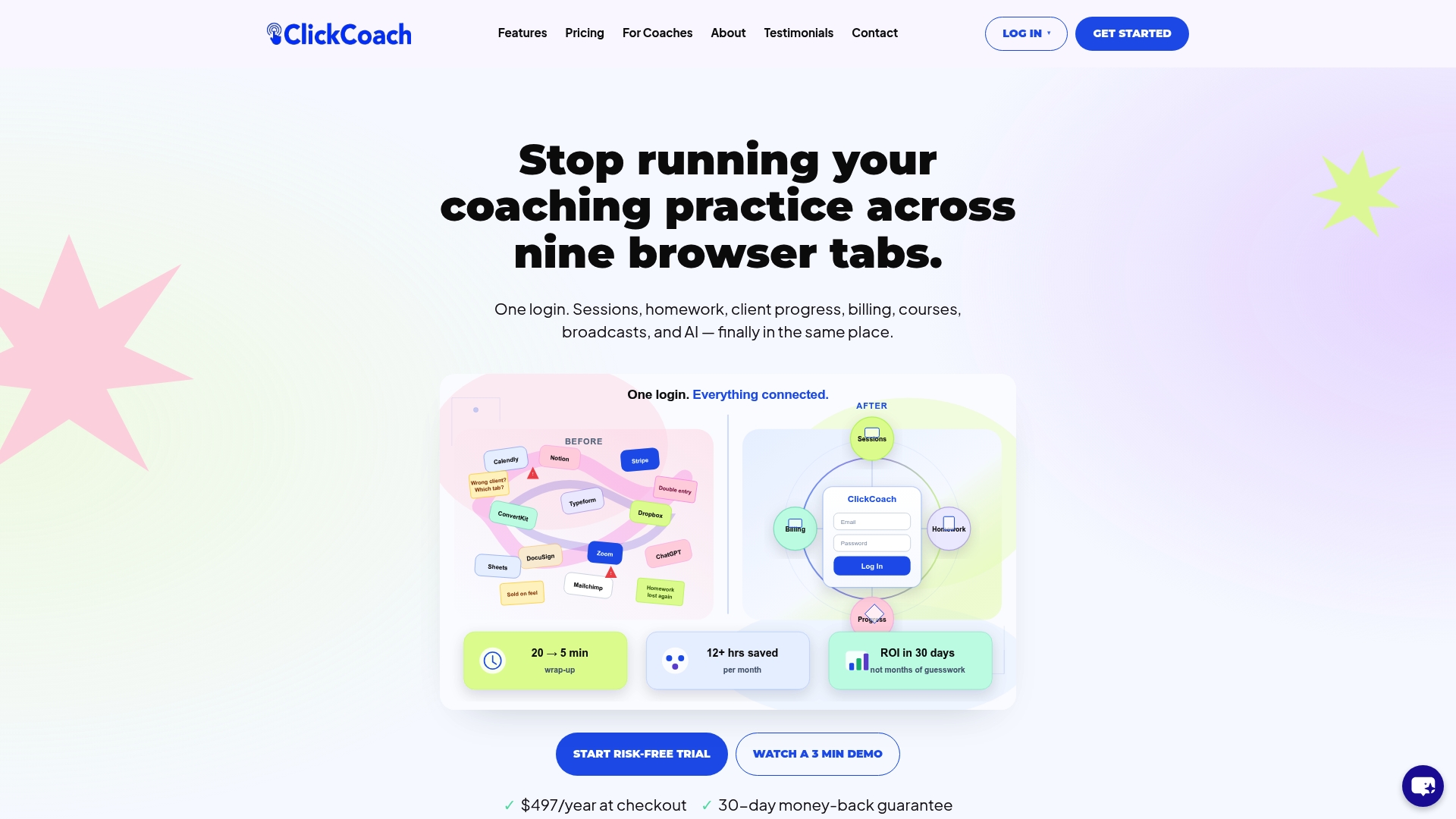
The platform supports brief, structured check-ins and gives you a single place to review client responses, spot trends, and send personalized feedback. Coaches using ClickCoach report saving up to 20 minutes per session by eliminating the admin work that typically surrounds client communication. Clients get a branded portal that makes submitting check-ins simple and consistent. If you want a practice where check-ins actually happen and the data is easy to act on, ClickCoach is built for exactly that.
FAQ
What is the ideal frequency for client check-ins?
Weekly check-ins work best for most coaching relationships. They are frequent enough to catch disengagement early and infrequent enough to respect client autonomy.
How long should a client check-in take?
Research supports keeping check-ins under two minutes, covering adherence, energy, sleep, and reflection. Shorter forms get completed more consistently than longer ones.
How do check-ins improve client retention?
Structured check-ins in the first 90 days significantly increase retention by making clients feel seen and accountable during the period when churn risk is highest.
Can automation replace personal check-in responses?
Automation handles data collection and flags effectively, but personal responses build trust. Automate reminders and threshold alerts; always respond to client submissions with a personalized message.
What should a coach do when a client misses a check-in?
Send one brief, warm message after a missed submission. Flag clients who miss two consecutive check-ins for a direct conversation, treating the absence as data rather than a failure.