

Scaling a coaching practice while maintaining client experience is defined as building repeatable systems that grow your revenue and client base without reducing the quality of care each client receives. Most coaches hit a ceiling not because they lack clients, but because their operating workflow depends entirely on their personal time. The solution is a combination of structured coaching models, automation, and data-driven client engagement. Coaches who apply these methods report saving 25–35 hours of weekly admin overhead through AI-driven tools, freeing them to focus on actual coaching. This article gives you the exact framework to scale coaching practice client experience without burning out or watering down your work.
What scalable coaching models do to client experience
The one-on-one coaching model is the most personal, but it is also the hardest to scale. Your revenue is capped by your available hours, and client experience depends entirely on your direct attention. That is why the most effective growth path combines a premium one-on-one tier with group and productized offerings.
Group coaching is the first major lever. Practices with 10 or more active clients can generate $10,000–$30,000 in monthly recurring revenue from just 4–6 hours of weekly coaching. That math matters because it means you can serve more clients with less time per person, without cutting corners on outcomes.

Productized packages are the second lever. When you move from bespoke hourly billing to fixed-scope packages, you can charge 2.4 times your previous hourly rate. Clients also benefit because they know exactly what they are getting and when. Clarity on outcomes reduces anxiety and increases satisfaction.
The key to making all three models work together is a signature coaching framework. A documented, repeatable method means your group clients get the same quality of guidance your one-on-one clients receive. Without that backbone, group programs feel generic and client satisfaction drops.
- Premium one-on-one tier: Keep 5–8 high-value clients whose fees fund your infrastructure and group program development.
- Group cohort model: Launch once you have 10 or more active one-on-one clients and a proven framework.
- Productized packages: Define clear deliverables, timelines, and outcomes so clients know what success looks like.
Pro Tip: Build your signature framework before you scale. Document every step, every tool, and every milestone so a group of 20 clients gets the same structured experience as your best one-on-one client.
Which automation tools actually improve client experience at scale?
Automation is the core mechanism that lets you serve more clients without working more hours. Early adoption of automations is the fastest way to reclaim your time and raise the quality of client communication. The coaches who scale well are not working harder. They have built systems that work while they sleep.
The most impactful starting point is onboarding automation. When a new client signs up, a well-built system sends a welcome email, books the first session via a scheduling tool like Calendly, and delivers an intake form automatically. Sophisticated coaches automate this entire sequence using tools like Zapier and ActiveCampaign. The client feels cared for from day one, and you spend zero minutes on manual setup.
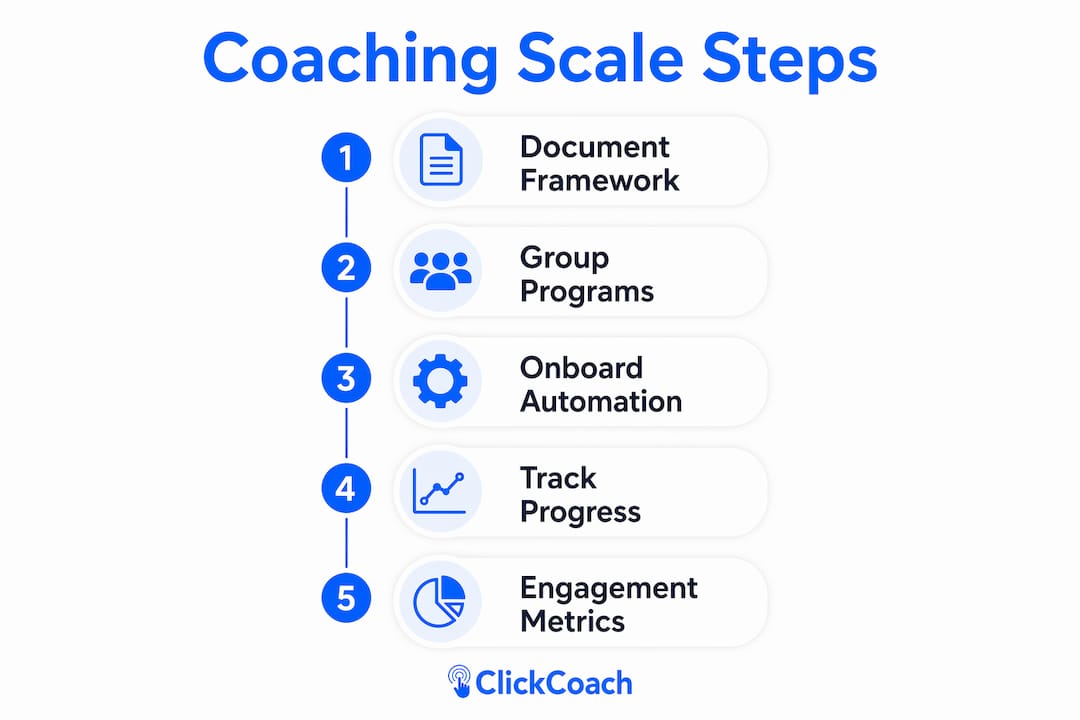
Progress tracking dashboards are the second critical system. Clients who can see their own progress visually stay more engaged and feel more confident in the process. Platforms that display milestone completion, session notes, and homework status give clients a sense of momentum. That sense of momentum is what keeps them renewing.
AI workforce training resources can help you understand how to apply AI tools specifically to client interactions, which is especially useful if you are new to integrating technology into your practice.
| Automation type | Client experience impact | Time saved per week |
|---|---|---|
| Onboarding sequences | Faster start, professional first impression | 3–5 hours |
| Scheduling automation | No back-and-forth emails, instant booking | 2–4 hours |
| Progress dashboards | Visible milestones, higher engagement | 1–2 hours |
| Billing and invoicing | Fewer payment delays, less friction | 2–3 hours |
| AI-assisted homework drafting | Personalized assignments at scale | 3–5 hours |
Pro Tip: Start with onboarding automation before anything else. It is the first thing a new client experiences, and a polished automated sequence signals professionalism immediately.
How do client engagement metrics reduce churn and increase renewals?
Clients leave coaching programs for one primary reason: they stop feeling progress. Predictive engagement scoring and dynamic dashboards let you spot disengagement before a client decides to quit. That early warning system is what separates coaches who maintain high renewal rates from those stuck in constant client replacement cycles.
The shift from opinion-based updates to metric-driven milestone reports is where client satisfaction compounds. When a client can see that they completed seven out of ten milestones, that data is more convincing than any verbal reassurance. Objective measurement of milestones reduces renewal friction by transparently demonstrating coaching value throughout the engagement.
Data-driven project planning frameworks apply directly here. Tracking client results with the same rigor you would apply to a business project gives both you and your client a shared language for progress.
| Approach | Traditional coaching | Data-driven coaching |
|---|---|---|
| Progress updates | Verbal summaries in sessions | Visual dashboards with milestone tracking |
| Churn detection | Noticed after client cancels | Flagged by engagement score drop |
| Renewal conversations | Based on coach’s impression | Backed by documented outcome data |
| Client confidence | Depends on coach’s reassurance | Built by client seeing their own data |
AI-powered CRM platforms deliver 20–30% revenue increases and up to 30% higher client satisfaction within the first year. That result comes from hyper-personalized engagement that responds to each client’s behavior, not a generic follow-up schedule.
Step-by-step: building scalable client experience systems
Building a scalable client experience system is not a one-day project. It is a sequenced build that starts with your core method and expands outward. Follow this order to avoid the most common pitfall: scaling before your foundation is solid.
-
Document your signature framework. Write down every phase of your coaching method, the tools you use, the questions you ask, and the milestones you track. This document becomes the backbone of every client experience you deliver, whether one-on-one or in a group of 30.
-
Audit your current admin load. Track every non-coaching task you do in a week. Scheduling, invoicing, follow-up emails, homework creation. That list tells you exactly where to automate first.
-
Automate onboarding end to end. Use scheduling tools, email sequences, and intake forms to handle the first two weeks of every new client relationship without manual input from you.
-
Launch your first group cohort after 10 active one-on-one clients. Use your documented framework as the curriculum. Keep the group small (8–12 people) for the first run so you can refine the experience before scaling further.
-
Introduce productized packages with fixed pricing. Replace open-ended hourly engagements with defined programs. A 90-day package with clear deliverables is easier to sell, easier to deliver, and easier to renew.
-
Raise prices as you add tiers. Your premium one-on-one rate should increase as your group program absorbs clients who previously could not afford one-on-one work. This keeps your revenue model healthy at every level.
-
Review engagement data monthly. Check which clients are completing homework, attending sessions, and hitting milestones. Use that data to intervene early with clients who are falling behind.
The most common mistake coaches make is launching group programs before their framework is documented. The result is a group experience that feels improvised, and clients notice. Build first, then scale.
How client experience improvements drive long-term practice growth
Client satisfaction is not just a feel-good metric. It is the engine of referrals, renewals, and revenue stability. Coaches who invest in client experience systems grow faster than those who rely on marketing alone, because satisfied clients refer new clients and renew at higher rates.
The one-to-many model works best when subsidized by high-value one-on-one clients. Those premium clients fund your infrastructure, your automation tools, and your group program development. Without that subsidy, scaling too fast creates a feast-or-famine cycle where you are always chasing new clients to replace churned ones.
- Referrals compound: One satisfied client who refers two others creates a growth loop that no paid ad can replicate at the same cost.
- Renewals stabilize revenue: A client who renews a 90-day package three times is worth six times the revenue of a single engagement.
- Premium clients subsidize scale: Maintaining 5–8 high-value one-on-one clients funds the systems that serve your group programs.
- Personalization at scale is possible: Documented frameworks and AI-assisted tools let you deliver tailored experiences to 50 clients with the same care you gave your first 5.
The coaches who avoid burnout are the ones who build systems before they need them. Waiting until you are overwhelmed to automate means you are already losing client experience quality.
Key takeaways
Scaling a coaching practice while protecting client experience requires documented frameworks, automation, and data-driven engagement before you add volume.
| Point | Details |
|---|---|
| Build your framework first | Document every phase of your method before launching group or productized programs. |
| Automate onboarding immediately | Scheduling, intake forms, and welcome emails should run without manual input from day one. |
| Use data to prevent churn | Engagement dashboards and milestone tracking let you intervene before a client disengages. |
| Keep a premium one-on-one tier | High-value clients fund your infrastructure and subsidize group program development. |
| Productize to raise rates | Fixed-scope packages allow you to charge significantly more while delivering clearer client outcomes. |
What I have learned about scaling without losing the human touch
The most counterintuitive lesson I have learned is that automation makes coaching feel more personal, not less. When you stop spending mental energy on scheduling and invoicing, you show up to sessions with more focus. Clients feel that difference immediately.
The coaches I see struggle with scaling are the ones who treat it as a volume problem. They think more clients means more revenue, so they take on more clients before their systems can support them. The result is a degraded experience for everyone, including themselves.
The right sequence is systems first, then volume. I have watched coaches build a solid onboarding automation, a documented framework, and a progress dashboard before they had 15 clients. When they hit 40 clients six months later, nothing broke. The experience held.
Client feedback is the most underused tool in this process. Most coaches collect it at the end of an engagement, if at all. The coaches who scale well collect it at every milestone. They use that data to refine their framework continuously, which means their group programs get better with every cohort.
The technology is not the hard part. Choosing which system to build first is. My answer is always onboarding. It is the first impression, it is fully automatable, and it sets the tone for the entire client relationship. Get that right before you touch anything else.
— Mitch
How ClickCoach supports your scaling strategy
ClickCoach brings session management, billing, client progress tracking, and homework assignments into one platform so you stop losing time across disconnected tools.
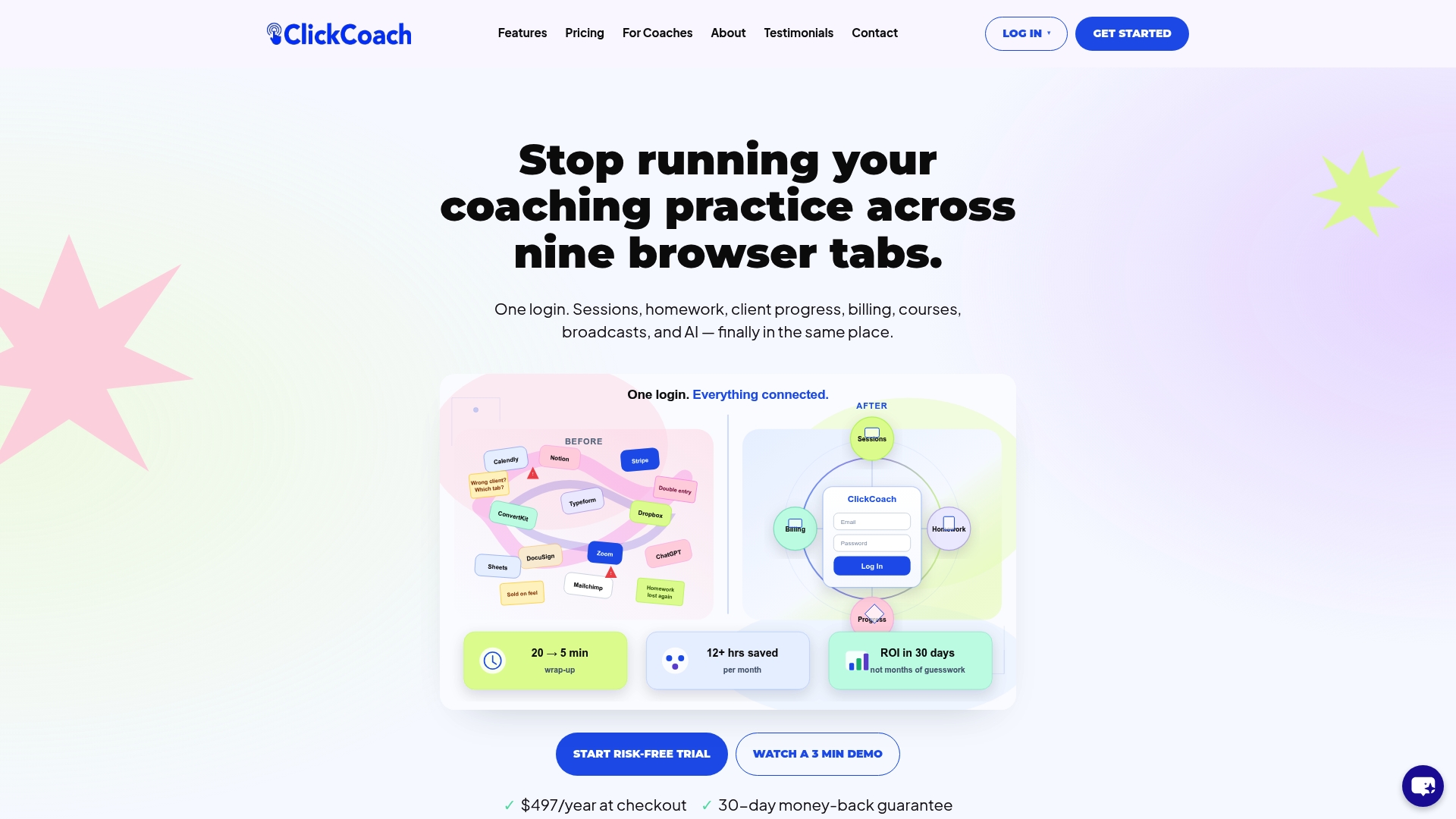
Coaches using ClickCoach report saving up to 20 minutes per session by eliminating the admin that normally lives outside the coaching conversation. The platform’s AI assists with drafting homework and tracking client progress, so your clients receive personalized, consistent support even as your practice grows. Branded client portals give every client a professional, easy-to-use experience from their first session onward. If you are ready to build the systems that let you grow without burning out, ClickCoach is built for exactly that.
FAQ
What does it mean to scale a coaching practice?
Scaling a coaching practice means growing your client base and revenue without a proportional increase in your working hours. It requires repeatable systems, documented frameworks, and automation.
How many clients do I need before launching group coaching?
The recommended threshold is 10 or more active one-on-one clients. At that point, you have enough proof of your framework and enough demand to fill a group cohort.
What is the fastest way to improve client experience while scaling?
Automating client onboarding is the highest-impact first step. A polished, automated welcome sequence sets a professional tone and removes manual work from the start of every client relationship.
How do engagement metrics reduce client churn?
Predictive engagement scores flag disengaged clients before they cancel. Coaches who track milestone completion and session attendance can intervene early and address issues before a client decides to leave.
Can I maintain personalization with a large client base?
Yes. Documented coaching frameworks and AI-assisted tools like those in ClickCoach let you deliver tailored homework, progress tracking, and communication to a large group without losing the individual focus each client expects.