

Why contracts are the foundation of every new coaching practice
A coaching contract is not paperwork you send after the real work begins. It is the first professional act that defines your relationship with every client. The International Coaching Federation identifies contracting as a core competency, describing it as the process of developing a shared understanding between coach and client about what will happen and how. Without that shared understanding, even the most skilled coach runs into avoidable friction.
Here is what a well-crafted coaching agreement accomplishes from day one:
- Defines mutual roles, expectations, and boundaries so neither party makes damaging assumptions
- Establishes psychological safety by clarifying confidentiality, scope, and communication rules
- Protects you legally in a field that remains unregulated at the federal and state level across the United States
- Reduces disputes over payments, refunds, and session terms before they start
- Aligns your coaching goals, methods, and fees so clients know exactly what they are buying
Poor or absent contracting leads directly to unfilled expectations and damaged relationships, and often to lost future business. That is a steep price for skipping a conversation.
What every effective coaching contract must include
A strong coaching service agreement covers more ground than most new coaches expect. Key contract elements include service description, scope limits, fees, payment schedule, refunds, cancellations, communication rules, confidentiality limits, client responsibilities, referral language, and intellectual property terms.
Practically, that means your contract should answer the questions a frustrated client asks after something goes wrong: What did I buy? What happens if I miss a session? Can I get a refund? Who owns the workbooks?
- Service description: Number of sessions, check-ins, and any materials such as workbooks or templates
- Scope limits: What coaching does not include, paired with a clear “not therapy” disclaimer
- Fees and payment: Full fee, payment schedule, accepted methods, and consequences for missed payments
- Refund and cancellation policy: Specific terms, not vague language like “no refunds”
- Confidentiality and data privacy: What you share, with whom, and under what conditions
- Intellectual property: Who owns your frameworks, recordings, and course content
- Dispute resolution: A mediation clause is a calmer, lower-cost option than going straight to court
- Client responsibilities: Attendance, completing assignments, and session behavior expectations
Pro Tip: Match every clause in your contract to how you actually deliver coaching. A mismatch between your sales page and your contract is one of the fastest ways to lose a dispute.
How contracting fits into the coaching process itself

Most new coaches treat contracting as a task to complete before coaching starts. That framing costs you. Contracting is the first coaching action that establishes equality and collaboration in the relationship, not a separate administrative step.
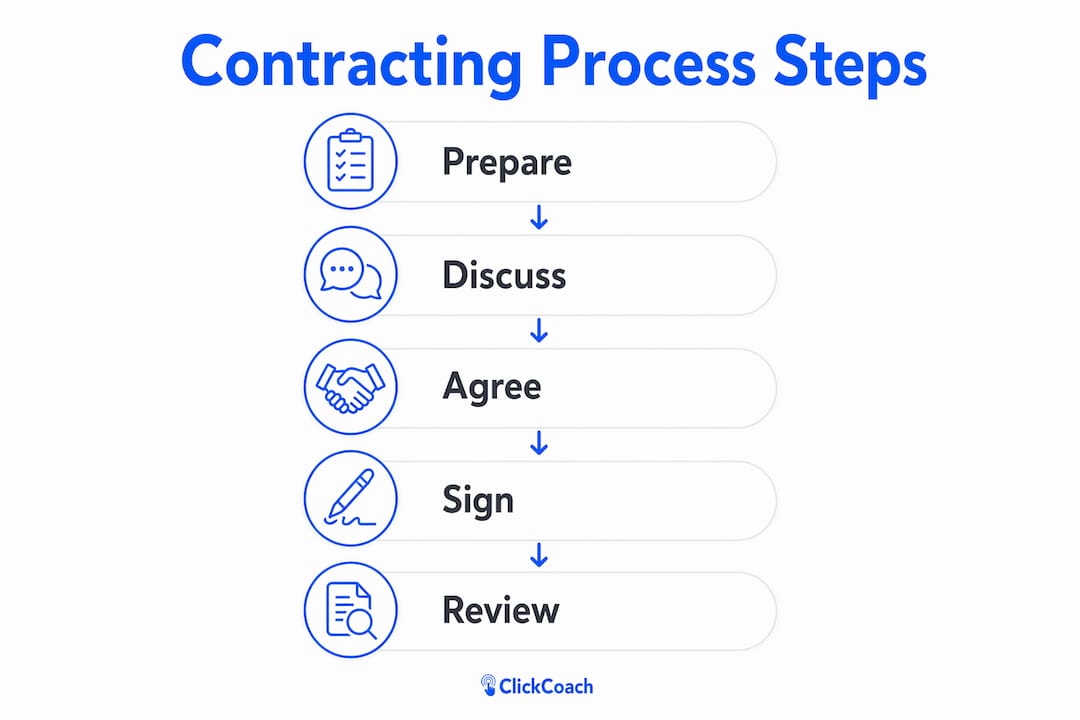
Think of it this way: the contract conversation is where you and your client co-create a shared language for success. You learn their fears and preferences early. They learn how you work, what you will and will not do, and what a good outcome looks like. That clarity shapes every session that follows.
Contracting also happens more than once. Agreements are revisited throughout the engagement as goals shift and new material surfaces. A session-level contract at the start of each meeting, covering what the client wants to work on that day, keeps the work focused and prevents drift.
Understanding the difference between career coaching and mentoring also helps you define your contract scope clearly, especially when clients arrive with expectations shaped by mentoring relationships rather than coaching ones.
Common pitfalls and legal considerations for U.S. coaches
The legal landscape for coaching in the United States is unusual. No federal or state government body issues a life coach license, though local business licenses are usually required, with fees generally ranging from $50 to $500 depending on your location. That low barrier to entry is a double-edged situation: anyone can practice, but without a regulator setting boundaries, clients and their attorneys can argue almost anything went wrong.
Coaching is unregulated, but that does not mean unprotected. A written client agreement with a clear “not therapy” disclaimer is your primary legal defense against unlicensed practice complaints from state mental health licensing boards.
Common mistakes new coaches make:
- Using a generic template that lacks key clauses for refunds, session expiry, and chargebacks
- Treating the contract as pure legal protection rather than a relational tool that sets client expectations
- Letting sales pages, checkout pages, and contracts tell different stories about your terms
- Skipping “not therapy” disclaimers, which raises unlicensed practice risk
- Never updating contracts after changing offers, adding group programs, or adopting new technology
Best practices for drafting and using contracts as a new coach
Experienced coaches dedicate real time to the contracting conversation. Taking 30 minutes to co-create the agreement through genuine dialogue builds rapport and sets the tone for the entire engagement. That is not time away from coaching. It is coaching.
A few practices that separate professional contracts from amateur ones:
- Customize for your niche. A financial coach faces different liability exposure than a grief coach. Your contract should reflect your actual risk profile.
- Use T&Cs with a checkbox for online coaching sold through a website or application form. Clients agree at checkout, which provides the same legal protection with less friction than a traditional e-signature document.
- Keep your document ecosystem aligned. Your contract, sales page, checkout page, and intake form must all reference the same core terms. When they conflict, confusion follows.
- Review annually. Contracts should be updated whenever your offer changes, you add contractors, or you introduce new technology like AI tools or client dashboards.
Pro Tip: Treat your contracting conversation as a 30-minute deep dialogue, not a quick signature step. Ask questions, invite the client to share what feels important, and let their answers inform how you frame the work ahead.
How to present and discuss contracts with clients
Send the contract before your first paid session, not during it. Give clients time to read it without the pressure of a live call. A short note explaining what the document covers and inviting questions sets a collaborative tone.
During your contracting conversation, walk through the key sections out loud rather than asking “any questions?” and moving on. Pause at confidentiality, refund terms, and scope limits. These are the clauses clients most often misremember later. When a client raises a concern, treat it as useful information about their expectations, not a negotiation to shut down.
After the conversation, confirm agreement in writing before the first session begins. For online programs, a checkbox at checkout works well. For one-on-one engagements, a signed document or a clear email confirmation both create a record.
Handling contract amendments and renewals
Coaching relationships evolve. A client who started with a six-session package may want to extend. Your pricing may change. You may add a group program or shift your delivery format. Each of these moments calls for a contract update, not a verbal agreement.
When amending a contract, document the change in writing and get explicit confirmation from the client. A short email stating the new terms and asking for a reply confirming agreement is sufficient for most changes. For significant shifts, such as a new fee structure or a change in scope, issue a revised agreement.
Renewals are a natural opportunity to revisit the full contract. Review every clause before sending a renewal, not just the fee and session count. Offers, tools, and legal requirements shift over time, and a yearly review keeps your agreements current with how you actually practice.
ClickCoach keeps your coaching practice organized from day one
Running a new coaching practice means managing sessions, tracking client progress, assigning homework, and handling billing, all while doing the actual coaching work. ClickCoach brings every piece of that into one organized platform so you spend less time on administration and more time with clients.
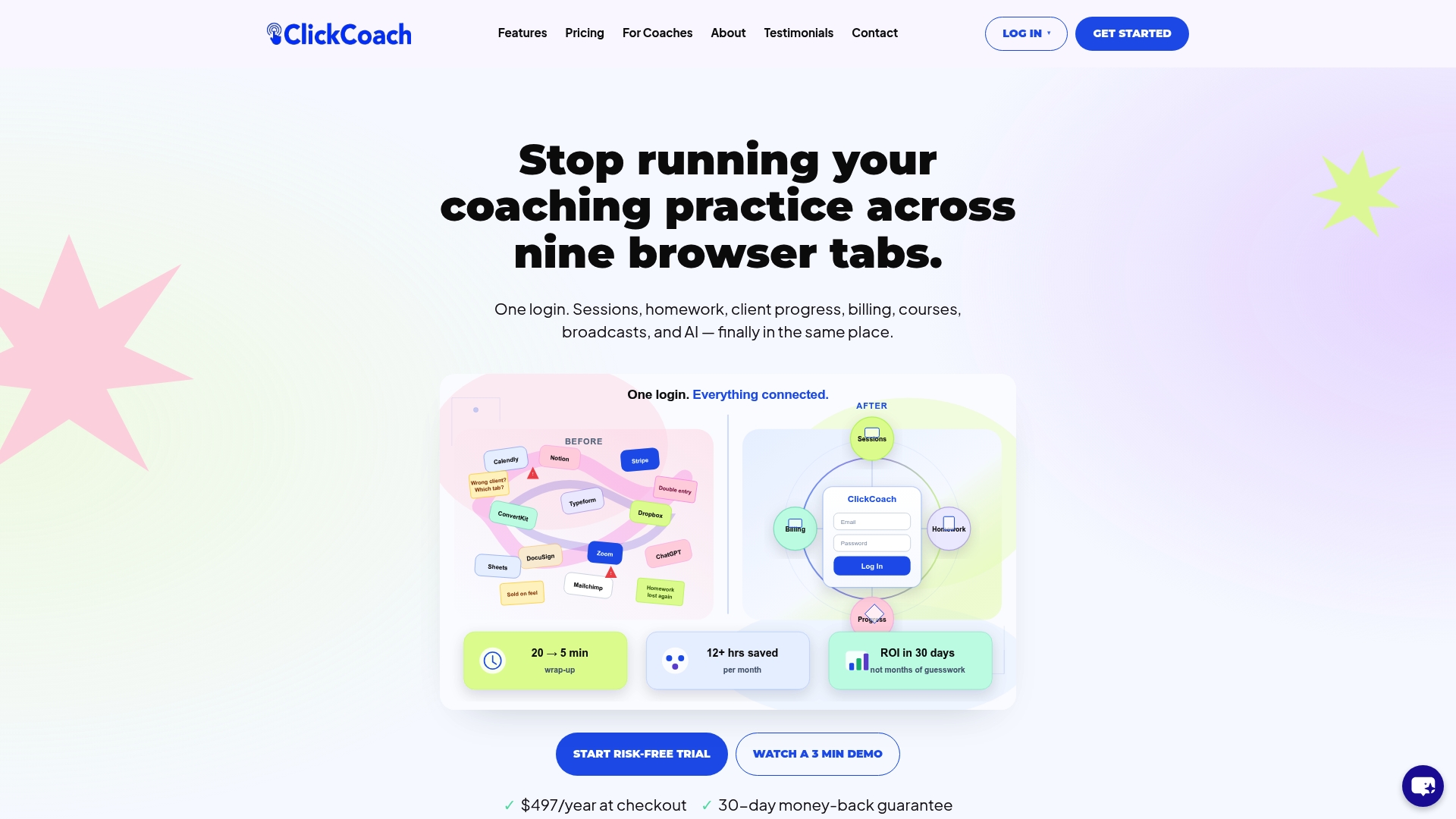
With ClickCoach, each client has a dedicated space where you can track goals, log session notes, assign action steps, and monitor follow-through between meetings. Billing and session scheduling live in the same place, so nothing falls through the cracks. For new coaches building their practice from the ground up, that consistency creates a professional experience clients notice and trust.
Key takeaways
A coaching contract is the first professional act that defines your client relationship, and skipping it or using a generic template creates legal and relational risk from day one.
| Point | Details |
|---|---|
| Contracts are relational, not just legal | A coaching agreement sets mutual expectations, builds trust, and shapes every session that follows. |
| Include all core clauses | Cover fees, refunds, scope limits, confidentiality, intellectual property, and a “not therapy” disclaimer. |
| U.S. coaches face real legal exposure | Coaching is unregulated federally and by states; local business licenses usually cost between $50 and $500. |
| Align your full document ecosystem | Sales pages, checkout pages, and contracts must all reference the same terms to hold up in a dispute. |
| ClickCoach supports consistent practice | ClickCoach keeps sessions, billing, and client progress in one place, supporting the professionalism your contracts promise. |