

Long-term client relationship best practices are the proven strategies coaches use to maintain trust, engagement, and loyalty over time. Retention problems rarely come from poor coaching content. Retention issues stem from unclear progress, inconsistent accountability, and lost emotional momentum. Coaches who build durable client relationships do so through deliberate systems, not personality alone. This guide covers the most effective methods, from communication rituals to renewal conversations, so you can grow a practice where clients stay, refer others, and keep coming back.
1. What are the most effective communication techniques for long-term client engagement?
Clear, consistent communication is the foundation of every lasting coaching relationship. When clients feel informed and heard, they stay. When they feel confused or ignored, they leave. Consistent communication builds trust and strengthens engagement well beyond active project periods.

The most common mistake coaches make is assuming clients will ask when they need something. Most won’t. Proactive outreach, even a brief check-in between sessions, signals that you are invested in their progress. It also catches disengagement before it becomes dropout.
Effective communication practices for coaches include:
- Setting clear response time expectations from day one (for example, replies within 24 hours on weekdays)
- Using a consistent channel for each type of message (urgent matters by phone, session notes by platform, general updates by email)
- Sending proactive progress summaries after every third session
- Scheduling brief mid-month check-ins during longer contracts
- Acknowledging client wins publicly when appropriate, such as in group channels or newsletters
Pro Tip: Automate reminders and scheduling confirmations, but write check-in messages personally. Clients notice the difference between a template and a human.
2. How do micro-events and tokenized rewards improve client retention?
Engagement rituals are one of the most underused tools in a coach’s retention toolkit. Performance coaches who implemented quarterly micro-events and tokenized rewards saw a 28% improvement in retention and a 44% increase in client referrals within nine months. Those numbers reflect a structural shift in how clients experience the coaching relationship, not just a loyalty perk.
Micro-events are low-cost, high-impact gatherings that reinforce client identity with your method. A 60-minute virtual workshop, a live Q&A, or a small group accountability session all qualify. They create community, which makes clients feel they belong to something larger than a one-on-one contract.
Tokenized micro-rewards work differently. They acknowledge specific behaviors, such as completing a homework module, hitting a milestone, or referring a peer. The reward does not need to be monetary. Access to a bonus resource, a personalized voice note, or early registration for a retreat all carry real perceived value.
Micro-event formats that work well for coaches:
- Monthly group coaching calls open to all active clients
- Quarterly themed workshops tied to a common client challenge
- Annual in-person or virtual retreats for long-term clients
- Milestone celebration posts or shoutouts in a client community
Pro Tip: Plan micro-events at least six weeks out and keep the format simple. A 45-minute Zoom call with a clear agenda outperforms an elaborate event that never happens.
Keep rewards ethical and transparent. Referral incentives should be disclosed clearly, and any reward structure should align with professional coaching standards in your certification body’s guidelines.
3. What role do personalized solutions and accountability play in sustaining long-term partnerships?
Personalization is not about customizing every session from scratch. It is about demonstrating that you understand each client’s specific situation, goals, and obstacles. Clients stay when relationships create visible, useful progress, both emotionally and behaviorally.
Accountability works in two directions. You hold clients accountable to their commitments. They hold you accountable to delivering a clear, trackable experience. When both sides see progress, the relationship deepens. When progress is invisible, doubt grows.
Practical accountability practices for coaches:
- Track client wins and obstacles in a shared document or platform after every session
- Share a brief written summary of progress patterns every four to six weeks
- Set specific, measurable goals at the start of each contract period
- Review those goals together at the midpoint, not just at the end
- Create a “next level” outline that shows clients what growth looks like beyond the current contract
Personalized solutions come from listening carefully and adjusting your method to fit the client’s pace, communication style, and learning preferences. A client who processes visually needs different homework than one who learns through conversation. Recognizing that difference and acting on it builds loyalty that no discount can replicate.
4. How to approach contract renewals naturally to extend client relationships
Renewal conversations feel awkward when coaches treat them as sales calls. They feel natural when coaches treat them as care conversations. Shifting renewal talks from sales pressure to genuine enthusiasm for client growth improves re-sign rates significantly.
The timing matters. Raise the topic of next steps two sessions before the contract ends, not in the final session. That gives both parties space to reflect without pressure. Frame it around the client’s goals, not your calendar.
Renewal conversation practices that reduce friction:
- Open with a progress reflection: “Look at how far you’ve come since we started.”
- Ask what the client wants to tackle next, before presenting any options
- Outline two or three possible paths forward, including a lighter-touch option
- Discuss off-boarding openly if the client is ready, and offer a warm transition plan
- Request a testimonial or feedback during this phase, when the relationship is at its warmest
Early renewal planning builds loyalty and removes the awkward sales pressure that makes coaches hesitate to have the conversation at all. Coaches who prepare for renewals from day one, by tracking wins and outlining next development levels throughout the contract, find that clients often raise the topic themselves.
5. How to manage client relationships like a product to build lasting loyalty
The most durable coaching practices treat client relationships as a product with intentional micro-touchpoints, not as a series of sessions to deliver. Treating retention as a design problem means shipping small experiences that compound value over time and create lasting emotional bonds.
This mindset shift changes how you audit your practice. Instead of asking “Did I deliver good sessions?” you ask “What does the client experience between sessions?” Those in-between moments, the follow-up message, the resource drop, the birthday note, are where loyalty is actually built.
The table below compares common engagement methods by their impact on retention and the effort required to implement them.
| Engagement method | Retention impact | Implementation effort |
|---|---|---|
| Personalized check-in messages | High | Low |
| Quarterly micro-events | High | Medium |
| Milestone celebration rituals | Medium | Low |
| Modular add-on offerings (courses, retreats) | High | High |
| Tokenized micro-rewards | Medium | Medium |
Modular offerings extend the client relationship beyond a single contract. A client who finishes a three-month coaching program can move into a monthly group call, an online course, or an annual retreat. Each module keeps the client in your ecosystem and deepens their investment in your method. This approach also supports coaching in change management contexts, where clients need ongoing support through evolving challenges.
Use micro-signals to measure engagement between sessions. Open rates on your emails, homework completion rates, and response times to check-ins all tell you whether a client is drifting before they formally disengage. Act on those signals early.
6. Building client trust through consistent systems and clear boundaries
Trust is built through predictability. Clients trust coaches who show up the same way every time, who communicate clearly, and who hold firm, fair boundaries. Clear boundaries and expectations from day one improve perceived ROI and client retention.
Boundaries protect both parties. When clients know exactly what is included in their contract, what happens if they miss a session, and how to reach you between calls, they feel safe. That safety is what allows them to do the deeper work that produces results.
Practical boundary-setting practices include defining session rescheduling policies in writing, specifying which communication channels you monitor and when, and outlining what happens at the end of a contract. Coaches who skip this step often find themselves managing client expectations reactively, which erodes trust over time.
Steady, planned contact tied to a regular agenda, session notes, and milestone celebrations has a measurable positive impact on retention. Systems replace reliance on memory and mood, which makes your practice more consistent and your clients more confident.
Key takeaways
The most effective long-term client relationships are built through deliberate systems, not instinct: clear communication, consistent accountability, and proactive renewal planning are the three pillars that determine whether clients stay or leave.
| Point | Details |
|---|---|
| Communication drives retention | Set clear channels, response times, and proactive check-ins from day one. |
| Micro-events accelerate referrals | Quarterly events and tokenized rewards produced a 44% referral increase in nine months. |
| Accountability must be visible | Share progress summaries regularly so clients see their own growth in concrete terms. |
| Renewals start at onboarding | Track wins and next-level goals throughout the contract to make re-signing feel natural. |
| Treat retention as design | Audit in-between touchpoints and build modular offerings to extend client relationships. |
What I’ve learned about building lasting client relationships
The coaches I’ve seen struggle most with retention are not bad coaches. They are coaches who rely entirely on session quality to carry the relationship. They deliver excellent work inside the hour and then go quiet. Clients fill that silence with doubt.
The mindset shift that changes everything is this: retention is a design problem, not a talent problem. You can be the most gifted coach in your niche and still lose clients if the experience between sessions feels disconnected. Start with one pillar, whether that’s a monthly check-in system, a quarterly micro-event, or a structured renewal conversation, and build from there.
Authenticity still matters. Clients can tell when a system feels mechanical. The goal is to use structure to free up your attention, so that when you do reach out, it feels genuine. The coaching and retention connection runs deeper than most coaches realize. Clients who feel seen and supported do not shop around.
— Mitch
How ClickCoach supports your client relationship systems
Building strong client relationships takes more than good intentions. It takes organized systems that work without you having to think about them.
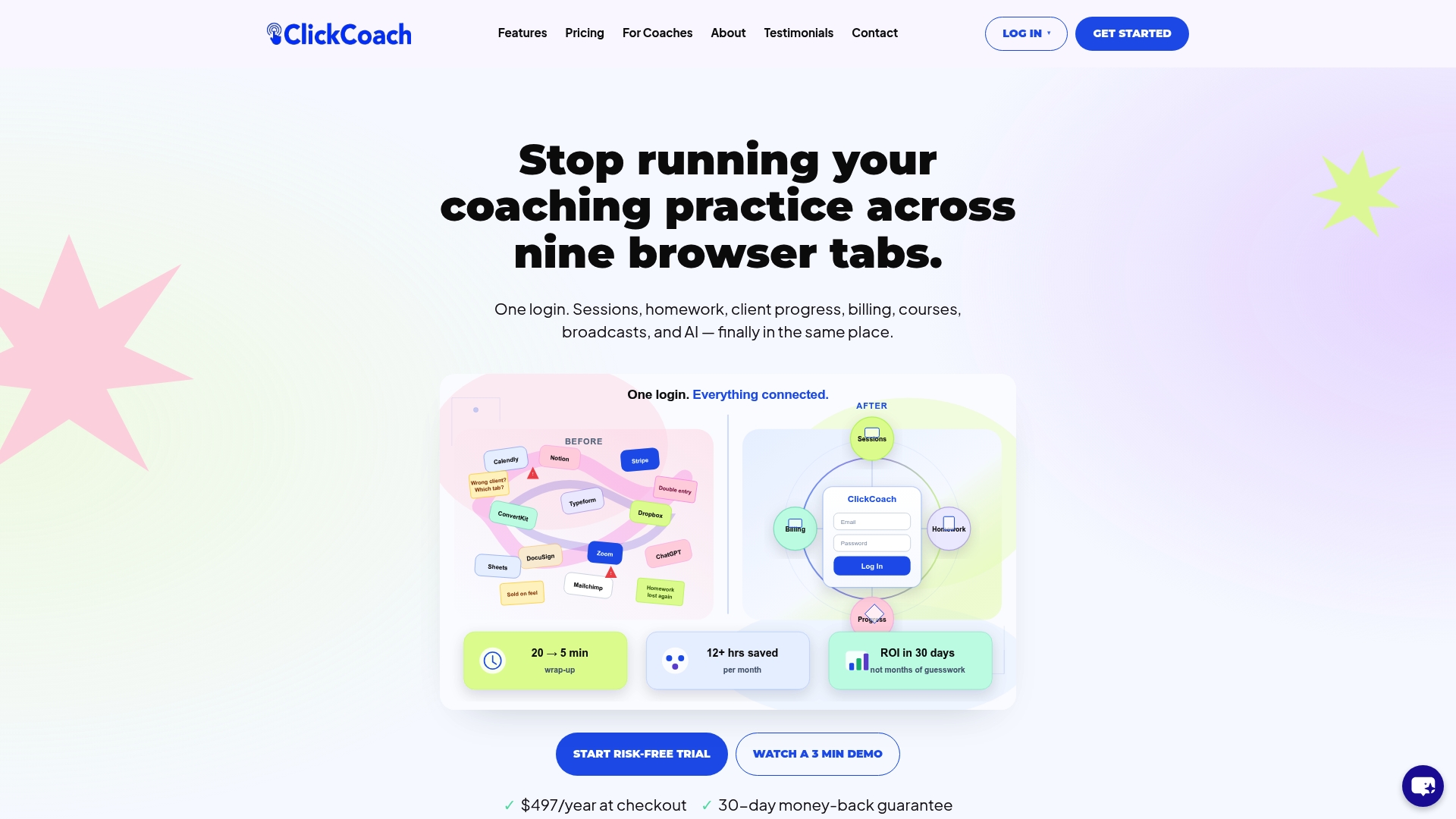
ClickCoach brings session management, client progress tracking, homework assignments, and billing together under one login. You can send personalized check-ins, track client wins, and prepare renewal conversations with full context, all from a single platform. Coaches using ClickCoach report saving up to 20 minutes per session by eliminating the app-switching that eats into their focus. Clients get a branded portal that makes their progress visible and their experience feel professional. If you want to put the practices in this article to work without adding more tools to your stack, explore ClickCoach and see how it fits your practice.
FAQ
What are the most important long-term client relationship best practices for coaches?
The most important practices are clear communication, consistent accountability, and proactive renewal planning. Retention problems almost always trace back to unclear progress and inconsistent follow-through, not coaching quality.
How often should coaches check in with clients between sessions?
A brief check-in every two to three weeks between active sessions is enough to maintain engagement without overwhelming clients. Small, regular touchpoints strengthen trust more than infrequent long messages.
When is the right time to start a renewal conversation?
Raise the topic of next steps two sessions before the contract ends. This gives clients time to reflect without pressure and frames the conversation around their goals rather than your sales cycle.
Do micro-events really improve client retention?
Yes. Performance coaches who ran quarterly micro-events and offered tokenized rewards saw a 28% improvement in retention and a 44% increase in referrals within nine months. Community-building experiences reinforce client commitment to the coaching method.
How can coaches make accountability feel supportive rather than punitive?
Track wins alongside obstacles and share progress summaries regularly. When clients see their own growth reflected back to them in concrete terms, accountability becomes motivating rather than pressuring.