

A coaching agreement is a formal document that defines the roles, responsibilities, and boundaries between a coach and a client. It functions as both a professional commitment and legal contract that protects both parties and sets clear expectations from day one. When you write coaching agreements for clients with care, you reduce misunderstandings, build trust, and create a foundation for real progress. The International Coaching Federation (ICF) treats a written agreement as a baseline professional standard, not an optional formality.
What key clauses should be in a coaching agreement?
A strong client coaching contract is built around a fixed set of core clauses. Missing any one clause creates gaps that surface weeks into the engagement, often at the worst possible moment. Each clause serves a specific purpose, and together they cover every dimension of the coaching relationship.
The ten core clauses
- Scope of coaching. Define what coaching includes and, critically, what it does not. Coaching is not therapy, consulting, or mentoring. Leaving out exclusions creates legal exposure and client confusion.
- Roles and responsibilities. State what the coach provides and what the client commits to. Clients who understand their own role show up more prepared.
- Goals and milestones. Specify the outcomes you are working toward together. Vague goals produce vague results.
- Session logistics. Cover session length, frequency, format (video, phone, in person), and communication channels between sessions.
- Fees, payment terms, and refund policy. State your rate, billing cycle, accepted payment methods, and what happens if a payment fails.
- Confidentiality. Specify what stays private, what exceptions exist (legally required disclosures, risk of harm), and how records are stored. Confidentiality clauses must include operational details about record keeping to maintain trust.
- Cancellation and rescheduling. Set notice periods, late cancellation fees, and how many reschedules are allowed per engagement.
- Termination. Explain how either party can end the agreement and what happens to any prepaid fees.
- Limitation of liability. Coaching does not guarantee outcomes. Disclaiming guarantees and clarifying that coaching is not a licensed profession protects you from unrealistic claims.
- Dispute resolution. Specify how disagreements are handled, whether through mediation, arbitration, or another process.
Pro Tip: Send the agreement at least 48 hours before the first session. Clients who read it without time pressure ask better questions and sign with genuine understanding.
How do you prepare before writing a coaching agreement?
Preparation before drafting saves you from rewriting clauses later. The goal is to understand your client’s needs and your own service structure before a single word hits the page.
Steps to take before you draft
- Conduct an initial consultation. Clarifying client goals and expectations before drafting lets you tailor the agreement to the actual engagement, not a generic template.
- Define your coaching scope. Decide which topics, methods, and outcomes fall inside your practice. Write these down before you open a template.
- Confirm session formats and schedules. Know whether you are offering weekly video calls, intensive days, or async support before you write the logistics clause.
- Decide your payment structure. Choose between per session, monthly retainer, or package pricing. Ambiguity here causes more disputes than any other clause.
- Review ethical guidelines. Pull the ICF Code of Ethics or the guidelines from your credentialing body. These inform your confidentiality and scope language directly.
- Choose plain language as your default. Simple, legally sound language improves client understanding and commitment. If your client needs a law degree to read your agreement, rewrite it.
- Gather a template as a starting point. A solid template gives you structure. You customize it to reflect your practice, not the other way around.
Coaches who skip preparation tend to write generic agreements that do not reflect their actual service. A generic agreement creates the same gaps it was meant to prevent.
Step-by-step process to write and finalize coaching agreements

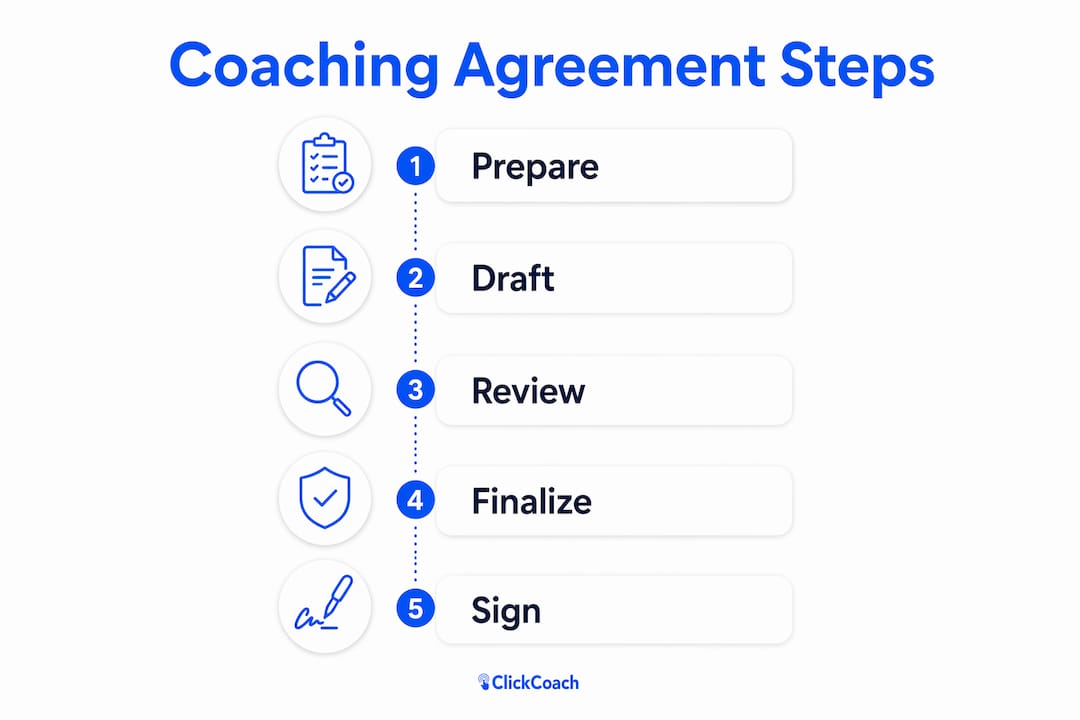
Writing a coaching contract is a drafting process, not a one-shot task. Work through it clause by clause.
The drafting process
- Start with scope. Write what coaching includes and what it excludes. Be specific. “This coaching engagement does not include psychological counseling, legal advice, or financial planning” is better than a vague disclaimer.
- Write roles and responsibilities next. Use plain sentences. “The coach will provide weekly 60-minute sessions. The client will complete agreed homework before each session.”
- Add goals and milestones. Leave space for the client to fill in their specific objectives, or draft them together after the consultation.
- Cover logistics and fees. State the session schedule, your rate, and your billing cycle in the same section so clients see the full picture at once.
- Draft the confidentiality clause carefully. Disputes about confidentiality often arise from unclear practices around notes and records. Specify what is recorded, where it is stored, and how exceptions are handled.
- Add cancellation, termination, and liability language. Keep these factual and neutral in tone. Avoid language that sounds punitive.
- Review for plain language. Read the full draft aloud. If a sentence trips you up, your client will not understand it either.
- Send for client review. Give your client time to read and ask questions. Answer every question in writing so there is a record.
- Obtain signatures. Digital signatures through tools like DocuSign or HelloSign are legally valid in most jurisdictions and faster than printing.
- Store the signed agreement securely. Keep a copy in a client folder, whether digital or physical. You may need it months later.
Pro Tip: Add a short “plain English summary” box at the top of your agreement. Three to four bullet points covering the key terms give clients confidence before they read the full document.
| Step | Action | Common mistake to avoid |
|---|---|---|
| Scope | Define inclusions and exclusions | Leaving out what coaching is not |
| Roles | Assign clear responsibilities | Assuming the client knows their role |
| Confidentiality | Specify records and exceptions | Vague “all information is private” language |
| Signatures | Use digital or physical sign-off | Sending without a signature process |
| Storage | File signed copy securely | Losing the agreement after signing |
Common mistakes coaches make in their agreements
Most agreement problems are predictable. Vague scopes, unclear roles, and absent cancellation policies are the most frequent causes of coaching disputes.
“A coaching agreement that lacks specificity is not a protection. It is a liability written in professional language.”
The most common pitfalls
- Vague scope. Writing “I will help you reach your goals” tells a client nothing. Specify the topics, methods, and time frame.
- Missing role definitions. Coaches who do not spell out client responsibilities often find clients who do not prepare, do not show up, and do not understand why results are slow.
- Weak confidentiality language. “Everything is confidential” is not enough. You need to address notes, third-party platforms, and legally required exceptions.
- No cancellation policy. Without a stated notice period and fee structure, late cancellations cost you income and create awkward conversations.
- No termination clause. Coaching relationships end. Without a termination clause, both parties are left guessing about notice periods and refunds.
- Excessive legal jargon. A client who cannot understand their agreement will not feel committed to it. Plain language is not less professional. It is more effective.
- No limitation of liability. Coaching does not guarantee outcomes. Without this clause, a dissatisfied client has more room to make claims against you.
When issues do arise mid-engagement, go back to the signed agreement first. If the clause exists, reference it directly. If the clause is missing, treat it as a lesson and update your template before the next client.
Key takeaways
A well-written coaching agreement protects both coach and client by defining scope, roles, confidentiality, and liability in plain, specific language before the first session begins.
| Point | Details |
|---|---|
| Start with scope | Define what coaching includes and excludes to prevent misalignment from day one. |
| Cover all ten clauses | Missing even one clause creates gaps that cause disputes weeks into the engagement. |
| Use plain language | Simple, clear language improves client understanding and commitment to the agreement. |
| Prepare before drafting | Clarify client goals and your service structure before writing a single clause. |
| Store signed copies securely | A signed agreement only protects you if you can find it when you need it. |
Why I stopped treating agreements as a formality
Early in my coaching practice, I used a two-page agreement I found online. It covered the basics, but it had no termination clause and no confidentiality detail beyond a single vague sentence. About four months in, a client asked whether our session notes could be shared with their employer. I had no clear answer. The agreement did not address it.
That moment cost me two hours of uncomfortable back-and-forth and nearly cost me the client relationship. After that, I rewrote my agreement from scratch using the ICF framework as a guide. The new version was longer, but every clause had a reason. Clients started asking better questions during the review stage, which told me they were actually reading it.
The coaches I see struggle most with agreements are the ones who treat them as a legal checkbox. A well-written agreement is a communication tool. It tells your client exactly what they are signing up for, what you will deliver, and what happens if things go sideways. That clarity builds trust before the first session starts. Coaches who invest time in their agreements report fewer disputes, cleaner endings, and clients who feel more accountable from the start.
If you are building your practice and want to create professional coaching agreements that reflect your brand and standards, treat the agreement as part of your client experience, not just your legal protection.
— Mitch
ClickCoach makes agreement management easier
Managing coaching agreements alongside sessions, billing, and client progress is a lot to hold together. ClickCoach brings all of it under one login so you are not switching between apps to find a signed contract or chase a payment.
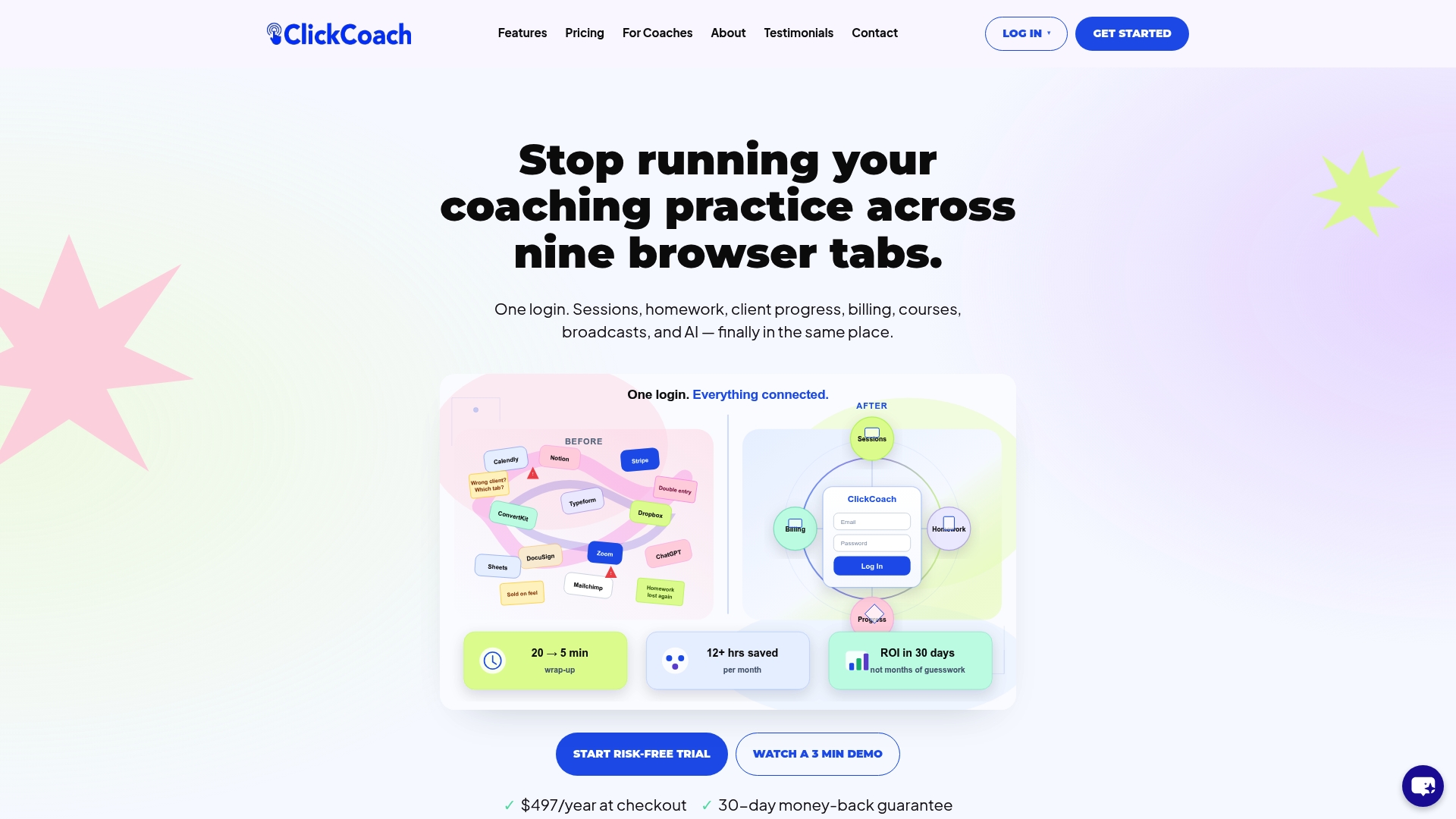
ClickCoach saves coaches up to 20 minutes per session by centralizing session management, billing, client progress tracking, and homework assignments in one place. Clients get a branded portal that makes the whole experience feel professional from the moment they sign. If you want to spend less time on admin and more time coaching, see how ClickCoach works and set up your practice the right way.
FAQ
What is a coaching agreement?
A coaching agreement is a formal contract between a coach and a client that defines the scope, roles, fees, confidentiality terms, and other conditions of the coaching relationship. It protects both parties and sets clear expectations before the engagement begins.
How many clauses should a coaching agreement include?
A complete coaching agreement covers ten core clauses: scope, roles, goals, logistics, fees, confidentiality, cancellation, termination, liability, and dispute resolution. Missing any clause creates gaps that typically surface mid-engagement.
Do coaching agreements need to be signed?
Yes. A signed agreement, whether digital or physical, confirms that both parties have read and accepted the terms. Digital signatures through tools like DocuSign are legally valid in most jurisdictions.
What should a confidentiality clause in a coaching agreement cover?
A confidentiality clause should specify what information stays private, what exceptions apply (such as legally required disclosures or risk of harm), and how records are stored and managed. Vague confidentiality language is one of the most common sources of coaching disputes.
Can I use a template to create coaching agreements?
Yes, templates are a solid starting point, but you must customize them to reflect your specific services, payment structure, and ethical guidelines. A generic template that does not match your actual practice creates the same gaps it was meant to prevent.