

Executive coaching progress tracking is defined as the systematic measurement of observable leadership behavior changes and goal attainment throughout a coaching engagement. The industry term for this practice is coaching evaluation, and it draws on methods like 360-degree feedback, pulse surveys, and behaviorally anchored goal frameworks aligned to ICF standards. Without a structured tracking system, you cannot prove coaching impact, adjust your approach in real time, or build the stakeholder confidence that sustains long-term client relationships. This guide gives you a clear, field-tested framework for building that system.
What is executive coaching progress tracking, and why does it matter?
Executive coaching progress tracking measures observable leadership behavior change using tools like 360-degree feedback and pulse check-ins aligned to defined success metrics. It is not a reporting formality. It is the mechanism that tells you whether your coaching is working and where to adjust.
The ICF-aligned approach to coaching evaluation requires three non-negotiable elements: a pre-coaching baseline, consistent tracking intervals, and outcome metrics that allow credible attribution. Each element does a specific job. The baseline anchors your measurement. The intervals catch behavioral shifts early. The outcome metrics connect individual growth to organizational results.
Coaches who skip any one of these elements end up with anecdotal evidence, not defensible data. Anecdotal evidence does not satisfy HR sponsors, does not justify contract renewals, and does not help you refine your method. Structured tracking does all three.
What metrics and tools are most effective for tracking coaching progress?
The most effective tools for tracking leadership coaching progress combine multi-source feedback with business impact indicators. No single metric tells the full story.

360-degree feedback is the backbone of competency-based coaching tracking. It captures multi-source perceptions and benchmarks leadership development across raters including direct reports, peers, and senior leaders. Follow-up pulse cycles then monitor behavioral changes between formal assessment windows.
Pulse surveys complement full 360 assessments by detecting early behavioral shifts without survey fatigue. Frequent, lighter pulse check-ins prevent data drift and keep coaching adjustments timely and relevant. A quarterly pulse between a pre-coaching and 12-month 360 gives you three data points instead of two.
Common metrics worth tracking across a coaching engagement include:
- Leadership engagement scores from direct report surveys
- Retention rates within the executive’s team
- Performance KPIs tied to the executive’s functional role
- Stakeholder satisfaction ratings from key internal partners
- Self-assessed confidence scores on specific behavioral targets
Pro Tip: Co-create your success metrics with the client’s HR sponsor at kickoff. Goals designed by HR, executives, and coaches together produce measurable, behaviorally anchored targets that hold up under scrutiny.
High-impact coaching measurement combines program compliance, progress vs. goals, and business impact outcomes into a single evaluation framework. Behavioral change often lags business indicators, so you need all three layers to tell a complete story.
How to establish baselines and milestones for coaching progress measurement
A pre-coaching baseline is the single most important data point in your entire tracking system. The ICF identifies lack of pre-coaching anchor data as the primary cause of failed ROI and progress tracking efforts. Without it, you cannot attribute change to coaching with any confidence.
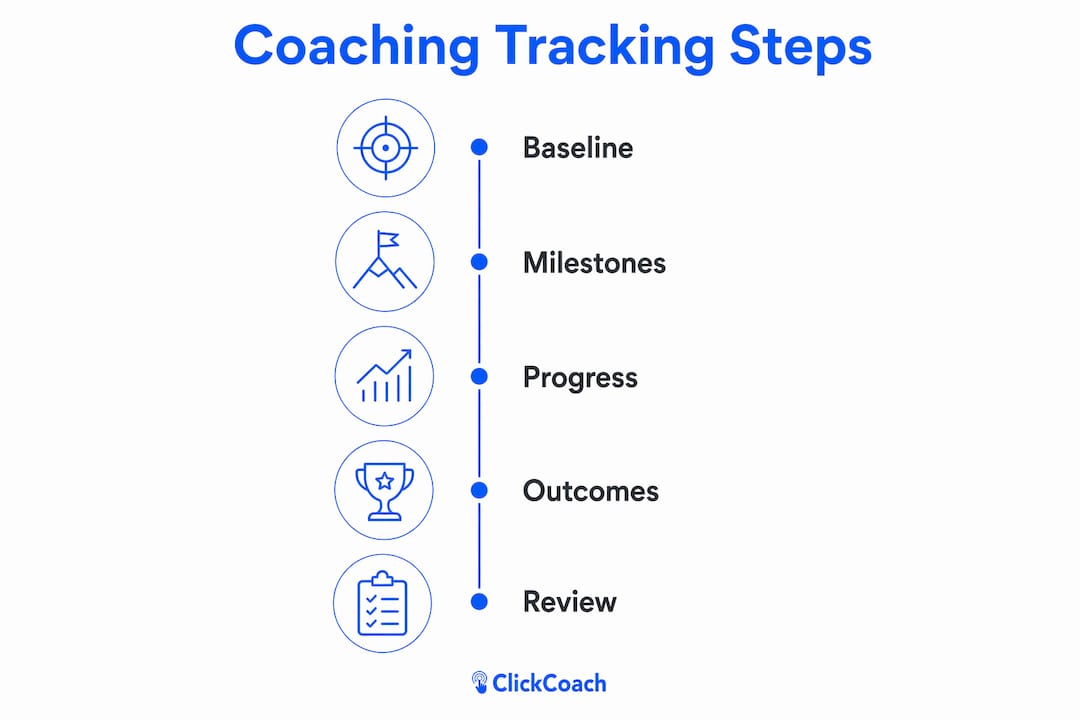
Collect baseline data before the first session using at least one of these sources: a 360-degree assessment, an engagement survey, or relevant business performance metrics. The specific source matters less than the timing. It must precede coaching.
A proven milestone cadence runs as follows:
- Pre-coaching baseline (week 0): Collect 360 data, engagement scores, and agreed behavioral targets with stakeholders.
- 90-day checkpoint: Run a pulse survey to detect early behavioral shifts and confirm coaching focus is on track.
- 6-month milestone: Conduct a mid-point stakeholder check-in and compare pulse data to baseline trends.
- 12-month assessment: Administer a full follow-up 360 and evaluate business impact metrics against baseline.
This common tracking cadence captures short, medium, and long-term ripple effects of coaching. It also gives you natural moments to adjust your approach before the engagement ends.
Pro Tip: Build your milestone schedule into the coaching contract. When stakeholders agree to the cadence upfront, you get better participation rates and cleaner data at each checkpoint.
Avoiding post-hoc measurement is critical. Coaches who design their tracking plan after coaching begins cannot establish a true baseline. They end up measuring impressions, not change.
What are common mistakes to avoid in executive coaching tracking?
Most tracking failures trace back to a small set of recurring errors. Recognizing them early protects your credibility and your client’s results.
- No pre-coaching baseline. Without it, you cannot separate coaching impact from other organizational factors. Attribution requires longitudinal tracking plus comparison groups where feasible to build defensible claims.
- Overreliance on self-reports. Self-assessed progress is useful context, not primary evidence. Multi-stakeholder feedback reduces bias and captures behavioral change that clients themselves often underestimate.
- Vague, non-behavioral goals. Goals like “become a better communicator” cannot be measured. Behavior-level targets with agreed-upon evidence and pre-coaching baselines prevent unfocused data collection and unclear attribution.
- Mixing timeframes without a framework. Behavioral change is near-term. Organizational outcomes are long-term. Presenting both in the same report without separating them confuses sponsors and undermines confidence in your results.
- Ignoring stakeholder ownership. Transparent methodology and sponsor-led reporting build credibility and stakeholder buy-in. When sponsors present results themselves, the data lands with far more authority.
Each of these mistakes is avoidable with upfront planning. The coaches who struggle most with tracking are those who treat measurement as an afterthought rather than a design element.
How to use progress data to enhance coaching effectiveness
Progress data is most valuable when you use it to make real-time decisions, not just end-of-engagement reports. Interpreting multi-source feedback mid-engagement lets you identify early behavioral change signals and shift your coaching focus before time runs out.
A multi-level evaluation model tracks four distinct layers: Reaction, Learning, Behavioral Change, and Business Results. Each layer answers a different question. Reaction data tells you whether the client values the process. Learning data shows whether new frameworks are being absorbed. Behavioral data confirms whether habits are shifting. Business results validate organizational impact.
Separating these layers in your progress reports also reduces stakeholder frustration. Compliance, behavioral progress, and business impact each operate on different timeframes. Sponsors who understand this distinction stay patient when business results take longer to appear.
| Evaluation layer | What it measures | Typical timeframe |
|---|---|---|
| Reaction | Client satisfaction and engagement with coaching | Sessions 1–4 |
| Learning | Adoption of new frameworks and self-awareness | 30–90 days |
| Behavioral change | Observable shifts in leadership actions | 90 days–6 months |
| Business results | Team performance, retention, KPI movement | 6–12 months |
Pro Tip: Share interim progress reports with sponsors at the 90-day mark, not just at program end. Early visibility builds confidence and keeps sponsors engaged as active partners in the client’s development.
Sustained gains require transition planning informed by your tracking data. Identify which behavioral changes are holding and which need reinforcement before the formal engagement closes.
Key Takeaways
Effective executive coaching progress tracking requires baselines, multi-source feedback, and layered evaluation to produce credible, defensible results.
| Point | Details |
|---|---|
| Establish a pre-coaching baseline | Collect 360 data or engagement scores before session one to anchor all future measurement. |
| Use multi-source feedback | Combine 360 assessments, pulse surveys, and stakeholder check-ins to reduce bias and capture real behavioral change. |
| Set behaviorally anchored goals | Co-create time-bound, observable targets with HR and sponsors at kickoff so progress is measurable. |
| Separate evaluation layers | Track compliance, behavioral change, and business results on distinct timeframes to avoid confusing sponsors. |
| Share interim reports | Provide 90-day progress updates to sponsors to build confidence and maintain active stakeholder engagement. |
Why tracking is the coaching skill most coaches underinvest in
Most coaches I talk to are excellent at the relational side of their work. They ask the right questions, build trust quickly, and create real moments of insight for their clients. Where they consistently underinvest is in the measurement architecture that makes those insights visible to the people who fund the engagement.
The uncomfortable truth is that great coaching without great tracking is invisible coaching. Sponsors cannot see what they cannot measure. When budget reviews come around, invisible coaching gets cut first.
What I have found actually works is treating the measurement plan as a co-creation exercise with the client and sponsor at the very start. When all three parties agree on what success looks like in behavioral terms, tracking stops feeling like paperwork and starts functioning as a shared accountability tool. The client owns it. The sponsor trusts it. You use it to guide every session.
The coaches who get the best long-term results are not necessarily the most gifted conversationalists. They are the ones who can walk into a sponsor review with a clean 90-day pulse report, a clear baseline comparison, and a confident narrative about what has changed and why. That combination of qualitative insight and quantitative evidence is what separates a trusted coaching partner from a vendor on a short-term contract.
Focus your tracking on the two or three behaviors that will genuinely move the leadership needle for your client. Measure those rigorously. Let the rest be context.
— Mitch
ClickCoach makes progress tracking part of every session
Tracking client progress across multiple engagements is one of the most time-consuming parts of running a coaching practice. ClickCoach consolidates that work into a single platform so you can focus on coaching, not administration.
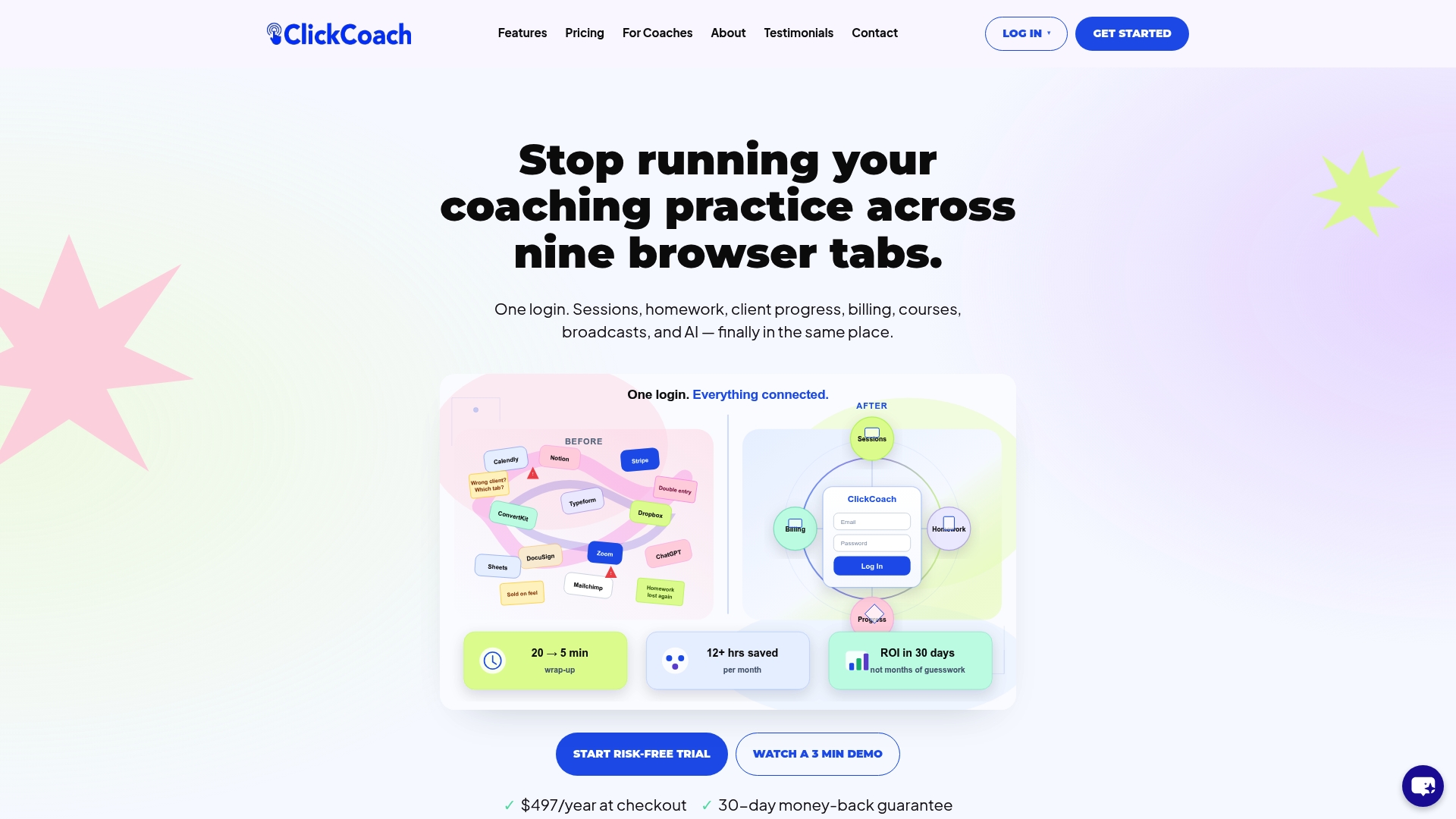
With ClickCoach, you get client progress dashboards, milestone tracking, and goal alignment tools all under one login. The platform’s AI assists with drafting session notes and tracking behavioral targets, saving you up to 20 minutes per session. Coaches report that clients engage more consistently when they have a branded portal showing their own progress in real time. If you want a practice where tracking is built in rather than bolted on, ClickCoach is worth a close look.
FAQ
What is executive coaching progress tracking?
Executive coaching progress tracking is the systematic measurement of observable leadership behavior changes and goal attainment throughout a coaching engagement. It uses tools like 360-degree feedback, pulse surveys, and behaviorally anchored milestones to evaluate coaching effectiveness.
What metrics should executive coaches track?
The most reliable metrics include 360-degree feedback scores, leadership engagement ratings, team retention rates, and performance KPIs tied to the executive’s role. Combining behavioral and business impact metrics produces the most credible picture of coaching ROI.
How often should progress be measured during a coaching engagement?
A proven cadence includes a pre-coaching baseline, a 90-day pulse survey, a 6-month stakeholder check-in, and a full 12-month 360-degree assessment. This structure captures short, medium, and long-term behavioral and business impact.
What is the biggest mistake in executive coaching tracking?
The most common mistake is failing to collect a pre-coaching baseline. Without baseline data, coaches cannot attribute behavioral change to coaching with any credibility, which undermines ROI reporting and stakeholder confidence.
How does competency-based coaching tracking differ from standard goal tracking?
Competency-based coaching tracking measures progress against specific, observable leadership behaviors rather than general outcomes. It requires behaviorally anchored goals co-created with stakeholders and multi-source feedback to confirm that targeted behaviors are actually changing.