

A coaching referral program is a structured system that rewards existing clients for introducing new clients to your practice. The best coaching referral program examples share two traits: dual-sided incentives and frictionless sharing. Structured programs generate 3–5 times more referrals than passive word-of-mouth. That gap exists because structure removes guesswork for clients and creates a clear reason to act. When you build referral touchpoints into your onboarding, milestone celebrations, and renewal conversations, you stop relying on luck and start building a repeatable growth system.
What are key features of successful coaching referral programs?
The single most important design decision is making the reward mutual. Dual-sided incentives outperform single-sided ones because both the referring client and the new client have a reason to move forward. Common effective rewards include session credits ranging from $100 to $200, free sessions, and discounts around 50%.
Framing matters as much as the reward itself. Referral messaging framed as a gift from one friend to another creates psychological safety and increases participation. “Give a friend a free session” outperforms “earn $50” because it positions the client as a generous person rather than a salesperson.

Friction is the silent killer of referral programs. Manual codes and forms reduce participation by 40–60%, while two-tap digital wallet sharing triples conversion compared to verbal codes. The easier you make sharing, the more clients will actually do it.
The strongest programs embed referral touchpoints into the natural rhythm of coaching:
- Onboarding: Send a referral link in the welcome email so clients know the program exists from day one.
- Milestone moments: Ask for a referral right after a client celebrates a win. Gratitude is the best referral trigger.
- Renewals: Include a referral reminder when clients re-sign, since their commitment signals satisfaction.
- Session follow-ups: Add a referral link to automated post-session emails so the ask happens consistently.
Pro Tip: Never ask for a referral mid-session when a client is focused on their own growth. The best ask comes right after a breakthrough, in a follow-up message, when their enthusiasm is highest.
Top coaching referral program examples and their core components
These five models represent the most proven approaches across different coaching niches and price points.
1. Free-session swap
Both the referring client and the new client receive a complimentary coaching session. This model works because the reward directly demonstrates your value. The new client experiences coaching firsthand, which dramatically reduces their hesitation to buy. The referring client feels generous rather than transactional. This approach works especially well for life coaches and executive coaches whose sessions carry a clear per-session price.
2. Digital gift card or credit program
You issue a digital credit, typically $100 to $200, that the referring client can share via a wallet app or email link. The new client receives a matching discount on their first package. This model excels at tracking because every credit has a unique identifier. It also removes the awkwardness of cash by framing the reward as a gift card rather than a commission.
“The most effective referral programs don’t feel like marketing. They feel like one friend doing something kind for another. When your client shares a digital gift card, they’re not selling your services. They’re giving their friend a head start.”
3. Gamified tiered rewards
Tiered rewards turn casual referrers into dedicated advocates by escalating the value of each reward as referral volume grows. A coach might offer one free session for the first referral, a premium workshop seat for the second, and a full month of coaching for the third. This structure rewards your most loyal clients disproportionately, which is exactly right. The clients who refer three or more people deserve a premium experience, and tiered programs deliver that automatically.
4. Buddy session model
A client brings a friend to a live group session or a specially designed “intro session” at no charge. The friend experiences your coaching style directly. This model works best for group coaches and wellness coaches because the marginal cost of adding one person to a session is low. The friend leaves with a personal experience rather than a secondhand recommendation, which converts at a much higher rate. For coaches building structured mental performance programs, buddy sessions also demonstrate team-based coaching value in real time.
5. Complementary business partnership referral
You partner with a business that serves the same clients but solves a different problem. A health coach might partner with a nutritionist. A business coach might partner with a bookkeeper. Each business refers clients to the other, and both sides offer a welcome discount to referred clients. This model expands your referral network beyond your existing client base. It also positions you as a trusted connector in your professional community, which builds reputation alongside revenue.
How to integrate referral programs into your coaching practice
Timing the referral ask at milestones matters more than scripting the perfect message. Clients refer when they feel grateful, proud, or excited. Your job is to recognize those moments and make the ask easy.
The most reliable referral moments in a coaching practice are:
- After a client hits a major goal: This is peak enthusiasm. A simple “I’d love for your friends to experience this too” with a link is enough.
- At the 30-day mark: Clients who stay past 30 days are satisfied. That’s the right time to introduce the referral program formally.
- During renewal conversations: A client who re-signs is telling you they believe in the process. Ask them to share that belief.
- After a strong testimonial: If a client sends you a glowing message, respond with gratitude and a referral link.
Personalized messages outperform generic templates. Give clients a short, pre-written message they can send as-is or edit. Most clients want to refer but don’t know what to say. Removing that barrier increases follow-through significantly.
Automating referral links into onboarding emails and session follow-ups builds referral volume sustainably. Programs embedded in your business rhythm outperform one-off campaigns because the ask happens at the right moment every time, not just when you remember to run a promotion.
Pro Tip: Add your referral link to your email signature. Clients forward coaching emails to friends more often than you think, and a visible link turns every email into a passive referral opportunity.
Comparing incentive types and sharing methods
The right incentive depends on your brand positioning and your clients’ motivations. Here is a direct comparison of the most common structures:
| Incentive or Method | Best For | Key Trade-off |
|---|---|---|
| Free session (dual-sided) | All coaching niches | High perceived value, requires scheduling capacity |
| Session credits ($100–$200) | Mid-range and premium coaches | Easy to track, feels less personal than a session |
| Tiered gamified rewards | High-volume group coaches | Strong engagement, requires program management |
| Experiential rewards (workshops, VIP access) | Premium and high-end coaching | Protects brand value, harder to scale |
| Automated digital links | Any coach with email automation | Highest conversion, requires initial setup |
| Manual referral codes | Coaches without automation tools | Easy to launch, 40–60% lower participation |
| Social media sharing prompts | Coaches with active online presence | Broad reach, lower conversion than direct sharing |
Monetary rewards work well for coaches whose clients are motivated by financial value. Experiential rewards work better for premium coaches because cash discounts can undermine the perceived value of a high-ticket program. A hybrid approach, pairing an automated digital link with an experiential reward, delivers both ease and brand alignment.
Key Takeaways
The most effective coaching referral programs combine dual-sided incentives, frictionless digital sharing, and referral asks timed to moments of genuine client gratitude.
| Point | Details |
|---|---|
| Dual-sided incentives win | Reward both the referrer and the new client to motivate both parties to act. |
| Remove friction immediately | Use automated digital links instead of manual codes to avoid a 40–60% drop in participation. |
| Time the ask at milestones | Ask for referrals right after client wins, renewals, or expressions of gratitude. |
| Frame referrals as gifts | “Give a friend a free session” outperforms cash-focused messaging every time. |
| Embed referrals in your workflow | Programs built into onboarding and follow-up emails outperform one-off campaigns. |
Why most coaches get referral programs wrong
Most coaches I work with launch a referral program once, mention it in a newsletter, and then wonder why nothing happens. The problem is not the incentive. The problem is the timing and the system.
Referrals are an emotional act. A client refers a friend because they feel proud of their progress and want to share that feeling. If you ask for a referral in a generic email blast, you miss the emotion entirely. The ask has to land at the right moment, and that moment is almost always right after a breakthrough.
The other mistake I see constantly is choosing rewards that cheapen the coaching relationship. A $20 Amazon gift card tells your client that their loyalty is worth $20. A free strategy session tells them their loyalty earns them more of what they already value. The reward signals what you think of the relationship.
My honest recommendation: start with the free-session swap. It is the simplest model, it requires no software, and it directly demonstrates your value to the new client. Once you see it working, layer in automation and tiered rewards. Build complexity only after the core behavior is established.
The coaches who grow fastest through referrals are not the ones with the most elaborate programs. They are the ones who ask consistently, at the right moment, with a message that feels like a gift rather than a pitch.
— Mitch
ClickCoach makes referral program management straightforward
Running a referral program on top of sessions, billing, and client tracking is a lot to manage across separate tools. ClickCoach brings all of it under one login, so you can track referral activity alongside client progress without switching apps.
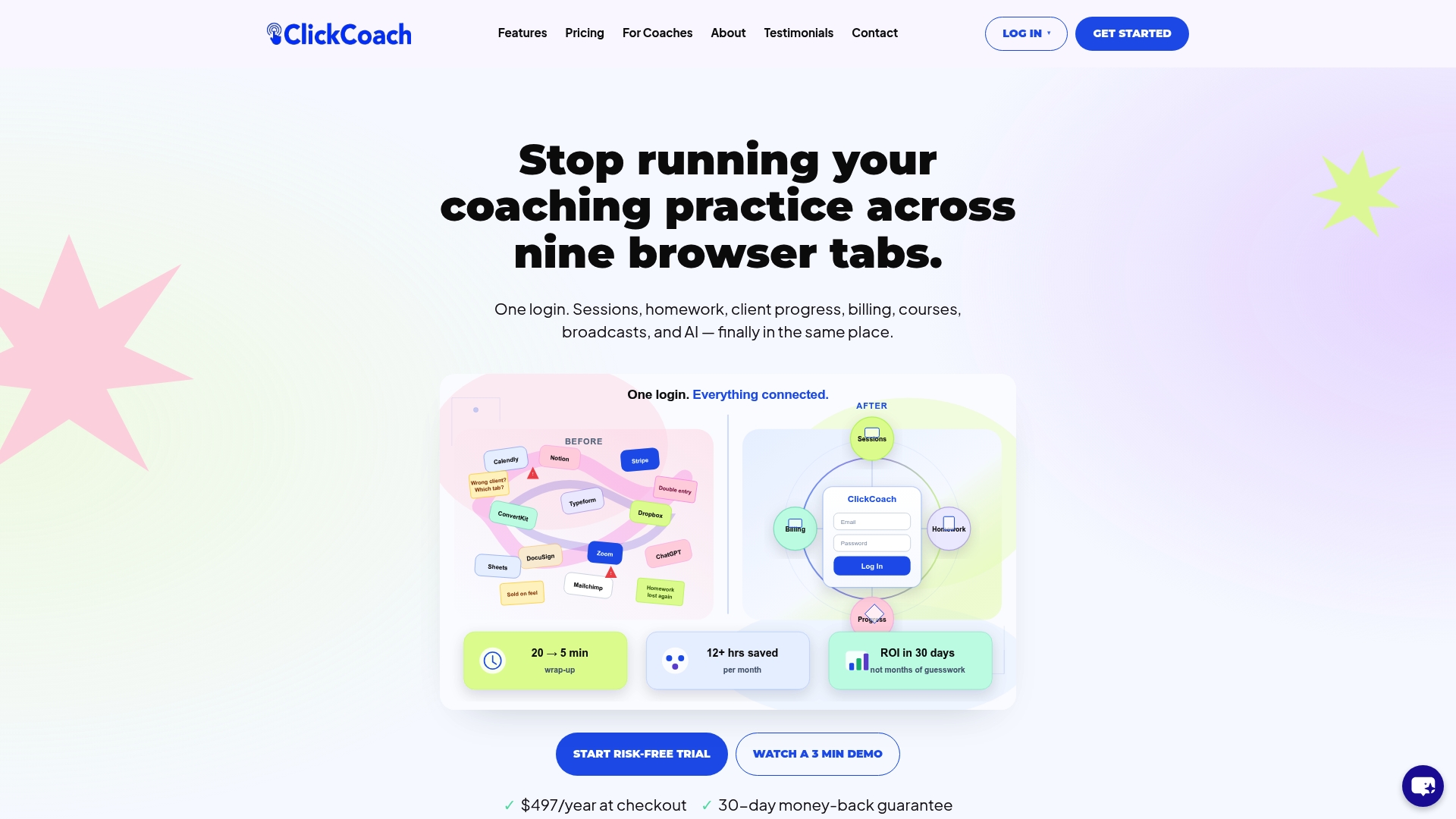
With ClickCoach, you can embed referral links directly into automated onboarding emails and session follow-ups, so the ask happens at the right moment every time. The platform’s client portal gives referred clients a branded first impression from day one. If you are ready to build a referral program that runs as part of your coaching practice workflow rather than on top of it, ClickCoach is built for exactly that.
FAQ
What is a coaching referral program?
A coaching referral program is a structured system that rewards existing clients for introducing new clients to a coach’s practice. The most effective programs offer dual-sided incentives and use automated digital sharing to minimize friction.
How do I set up a referral program for my coaching business?
Start by choosing a dual-sided incentive, such as a free session for both the referrer and the new client. Then identify your top referral moments, like milestone completions and renewals, and embed a referral link into your automated follow-up emails.
What are the best coaching referral incentives?
Free sessions, session credits ranging from $100 to $200, and experiential rewards like workshop access are the most effective coaching referral incentives. Premium coaches favor experiential rewards because they protect brand value better than cash discounts.
Why do manual referral codes hurt participation?
Manual codes and forms add steps that most clients skip. Research shows friction in referral sharing reduces participation by 40–60%, while two-tap digital links triple conversion compared to verbal codes.
How often should I ask clients for referrals?
Ask at natural high-points: after a major client win, at the 30-day mark, during renewals, and after a client sends a strong testimonial. Consistent timing tied to genuine moments of gratitude produces far better results than scheduled mass campaigns.