

Client data management coaching is defined as the structured practice of systematically collecting, organizing, securing, and using client information to improve coaching outcomes and practice efficiency. Professional coaches who apply this discipline report referral rates up to 4 times higher and the ability to manage 30 or more clients simultaneously, compared to 2–15 clients without formal systems. The industry standard terms for this work are client data governance and client records management, though the coaching community increasingly uses “data management coaching” to describe the full workflow. Coaches who treat client data as a core practice asset, rather than an administrative afterthought, build stronger client relationships, meet GDPR and HIPAA obligations, and grow their practices with far less friction.
What is client data management coaching and why does it matter?
Client data management coaching is the ongoing process of building, maintaining, and refining the systems coaches use to handle client information. It covers everything from intake forms and session notes to billing records, progress tracking, and communication logs. The goal is a single, coherent picture of each client that supports better decisions in every session.
Coaches who lack formal data systems often rely on scattered spreadsheets, email threads, and handwritten notes. That fragmentation creates gaps in session continuity, increases the risk of compliance violations, and slows down administrative work. The importance of client data becomes clear the moment a coach tries to recall a client’s goals from three months ago without a reliable record.
Effective client data management also signals professionalism to clients. When a coach references a client’s previous breakthroughs accurately and follows up on commitments made in prior sessions, trust deepens. That trust is the foundation for referrals and long-term retention.
How do integrated client data systems improve coaching workflows?
Integrated client records function as a single source of truth for every interaction a coach has with a client. Rather than opening four different apps to find a session note, an invoice, a scheduled appointment, and a progress update, coaches access all of that from one place. The practical result is less administrative friction and more mental bandwidth for actual coaching.

Fragmented manual tracking creates what practitioners call “execution sloppiness.” A coach forgets to send a follow-up, misses a billing cycle, or loses a key insight from a previous session because it lived in a notebook that is now buried. Integrated systems eliminate those gaps by connecting scheduling, billing, notes, and outcome tracking in one coherent workflow.
For solo coaches and small teams, the benefits are especially significant. A lightweight data architecture that links client notes, scheduling, billing, and outcomes supports better decisions without requiring enterprise-level complexity. The system does not need to be elaborate. It needs to be consistent and connected.
Key features that belong in any integrated coaching data system:
- Client profiles that store intake information, goals, session history, and communication preferences
- Session notes linked directly to each client record and accessible before every call
- Scheduling integration so appointment history and upcoming sessions appear alongside client data
- Billing and invoicing connected to client records to eliminate duplicate data entry
- Progress tracking that captures measurable outcomes over time
Pro Tip: Set up a standard intake template that captures the five data points you reference most often in sessions. Consistency at intake makes every subsequent session faster to prepare for.
What compliance requirements apply to coaching client data?
Coaches handling client data operate under legal obligations that vary by location and specialty. GDPR applies to any coach working with clients in the European Union, regardless of where the coach is based. HIPAA applies to health and wellness coaches in the United States who handle protected health information. Both frameworks share a common principle: collect only what you need, protect what you collect, and give clients control over their own data.
GDPR requires coaches to respond to client data requests within 30 days and to notify relevant authorities of a data breach within 72 hours. Formal data retention policies should include reviews every 6–12 months, with non-essential records purged on a regular schedule. Informed consent must be documented before data collection begins.
HIPAA compliance for health coaches requires a more technical set of safeguards. Health coaches managing sensitive data must implement Business Associate Agreements with any software vendor that touches client health information. Required technical controls include encryption, multi-factor authentication, unique user IDs, automatic session logout, and audit logging. Staff or contractors who access client data also require documented training.
A practical compliance checklist for coaches:
- Document your lawful basis for collecting each type of client data.
- Create a written data retention policy and schedule reviews every 6 months.
- Use encrypted storage for all client records, including session notes and intake forms.
- Enable multi-factor authentication on every platform that holds client data.
- Prepare a breach response plan that meets the 72-hour GDPR notification window.
- Obtain written consent before using any AI tool that processes client information.
Data minimization is the most overlooked compliance principle in coaching. Coaches frequently collect detailed personal information during intake that they never reference again. Reviewing intake forms annually and removing fields that do not serve the coaching process reduces both compliance risk and storage overhead.
How does client data management build trust and improve relationships?
CRM tools are relationship infrastructure, not just administrative software. When a coach uses centralized client history to personalize follow-ups, reference past wins, and anticipate upcoming challenges, the client experiences care rather than process. That distinction is what separates transactional coaching from genuinely transformative work.
The risk of data-driven coaching is that it feels mechanical. A coach who reads from a checklist of client facts without genuine engagement creates a cold interaction. The data should inform the conversation, not script it. Centralized records free up cognitive space so coaches can be fully present, because they are not trying to remember details from memory.
Transparency about data use also strengthens the relationship. Coaches who explain what data they collect, how they store it, and who can access it give clients a sense of control. That transparency is especially important when AI tools are part of the workflow.
Practical ways to use client data to deepen relationships:
- Review session notes 10 minutes before each call to reconnect with the client’s current priorities.
- Use progress tracking data to celebrate milestones the client may have forgotten.
- Send personalized check-ins between sessions based on goals recorded in the client profile.
- Reference specific language the client used in previous sessions to show genuine attention.
Pro Tip: Ask clients during onboarding how they prefer to receive follow-up communications. Record that preference in their profile and honor it consistently. Small details like this build significant trust over time.
For coaches working in relationship-focused specialties, such as those offering marriage coaching services, centralized client records are especially critical. Relationship coaching involves sensitive disclosures that require careful documentation and strict confidentiality.
How do you implement effective client data management processes?
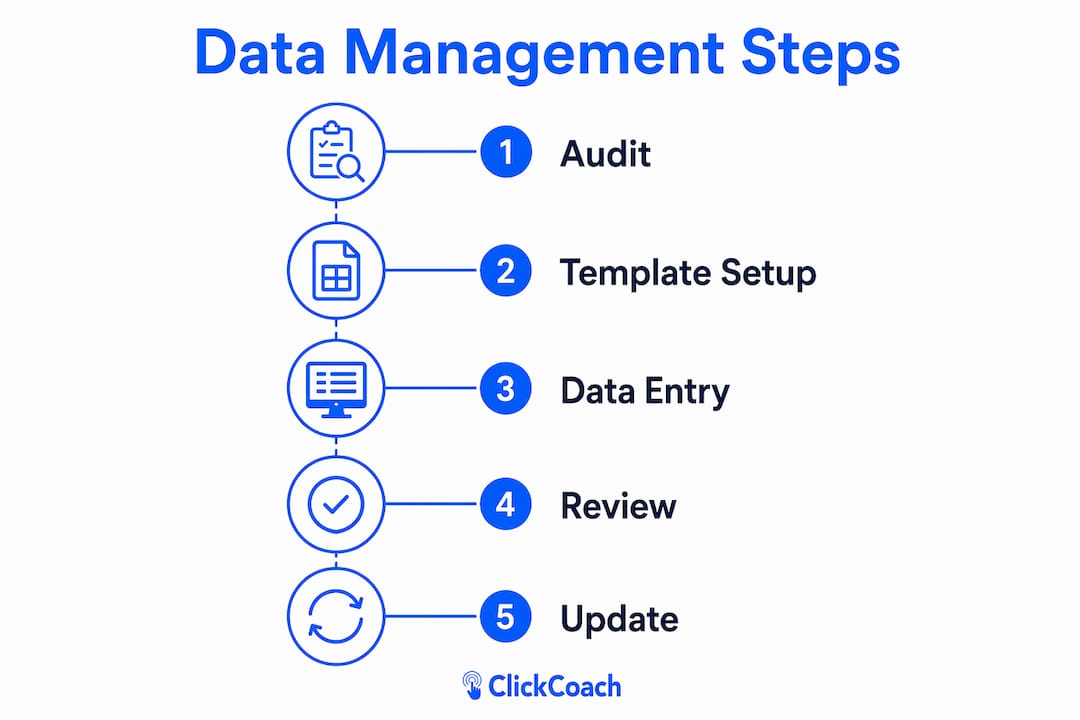
Building a reliable client data management system starts with an honest audit of your current workflow. Most coaches discover they are using three to five disconnected tools and storing sensitive information in at least one unsecured location. The audit creates a baseline and reveals the highest-priority gaps to address first.
AI integration into coaching workflows requires explicit client disclosure before any client data touches an AI system. Coaches must confirm that the AI platform encrypts data, explain how client information is anonymized, and give clients the right to opt out of AI processing entirely. Standard AI prompts can expose sensitive details if these precautions are not in place.
A practical implementation sequence for coaches:
- Audit your current tools. List every platform, file, and communication channel that holds client data. Identify which are encrypted and which are not.
- Select a centralized platform. Choose a system that connects client profiles, scheduling, billing, and session notes. Avoid building a patchwork of single-purpose apps.
- Create a privacy notice. Draft a clear, plain-language document explaining what data you collect, why, and how clients can request changes or deletion.
- Onboard clients with consent. Collect signed consent before the first session. Store the signed document in the client’s profile.
- Schedule quarterly reviews. Regular confidentiality audits should check for data leaks, review retention policies, and clean old files from inactive client records.
- Train before you automate. Before adding AI tools, document your data disclosure process and test it with a trusted colleague.
The most common mistake coaches make is treating setup as a one-time event. Client data management is a continuous process. Regulatory requirements change, client rosters grow, and new tools introduce new risks. Quarterly reviews catch problems before they become violations.
Key Takeaways
Client data management coaching is the ongoing practice of organizing, securing, and using client information to improve coaching outcomes, meet legal obligations, and build lasting client trust.
| Point | Details |
|---|---|
| Define your data system early | Set up centralized client profiles, session notes, billing, and scheduling before your roster grows. |
| Comply with GDPR and HIPAA | Review retention policies every 6–12 months and respond to client data requests within 30 days. |
| Use CRM as relationship infrastructure | Centralized client history supports personalized follow-ups and stronger session continuity. |
| Disclose AI use explicitly | Obtain written client consent before any AI tool processes client information. |
| Audit quarterly, not annually | Regular confidentiality reviews catch data leaks and policy gaps before they become compliance violations. |
What I have learned about data management after years of coaching practice
Coaches consistently underestimate how much their data habits shape their client relationships. The coaches I have seen grow fastest are not necessarily the most skilled in their methodology. They are the ones who know their clients deeply because their records are accurate, current, and easy to access.
The most damaging mistake I see is the “set it and forget it” approach to data systems. A coach builds an intake form, sets up a folder structure, and considers the job done. Six months later, sensitive files are sitting in an unencrypted folder, the retention policy has never been reviewed, and the intake form still asks for information the coach never uses. Data management is not a setup task. It is a practice discipline, the same way session preparation is a discipline.
The referral growth that comes from good data management is real, but it is indirect. Clients refer others because they feel genuinely known and cared for. That feeling comes from a coach who shows up prepared, follows through on commitments, and handles sensitive information with obvious care. The data system is the backbone that makes that consistency possible.
The regulatory landscape is also moving faster than most coaches realize. GDPR enforcement actions against small businesses have increased, and AI-specific data regulations are emerging in multiple jurisdictions. Coaches who build good data habits now will adapt to new requirements with far less disruption than those who are still working from spreadsheets.
— Mitch
How ClickCoach supports your client data management practice
ClickCoach brings together the core functions of client data management under a single login, so you are not stitching together separate tools for notes, billing, scheduling, and progress tracking.
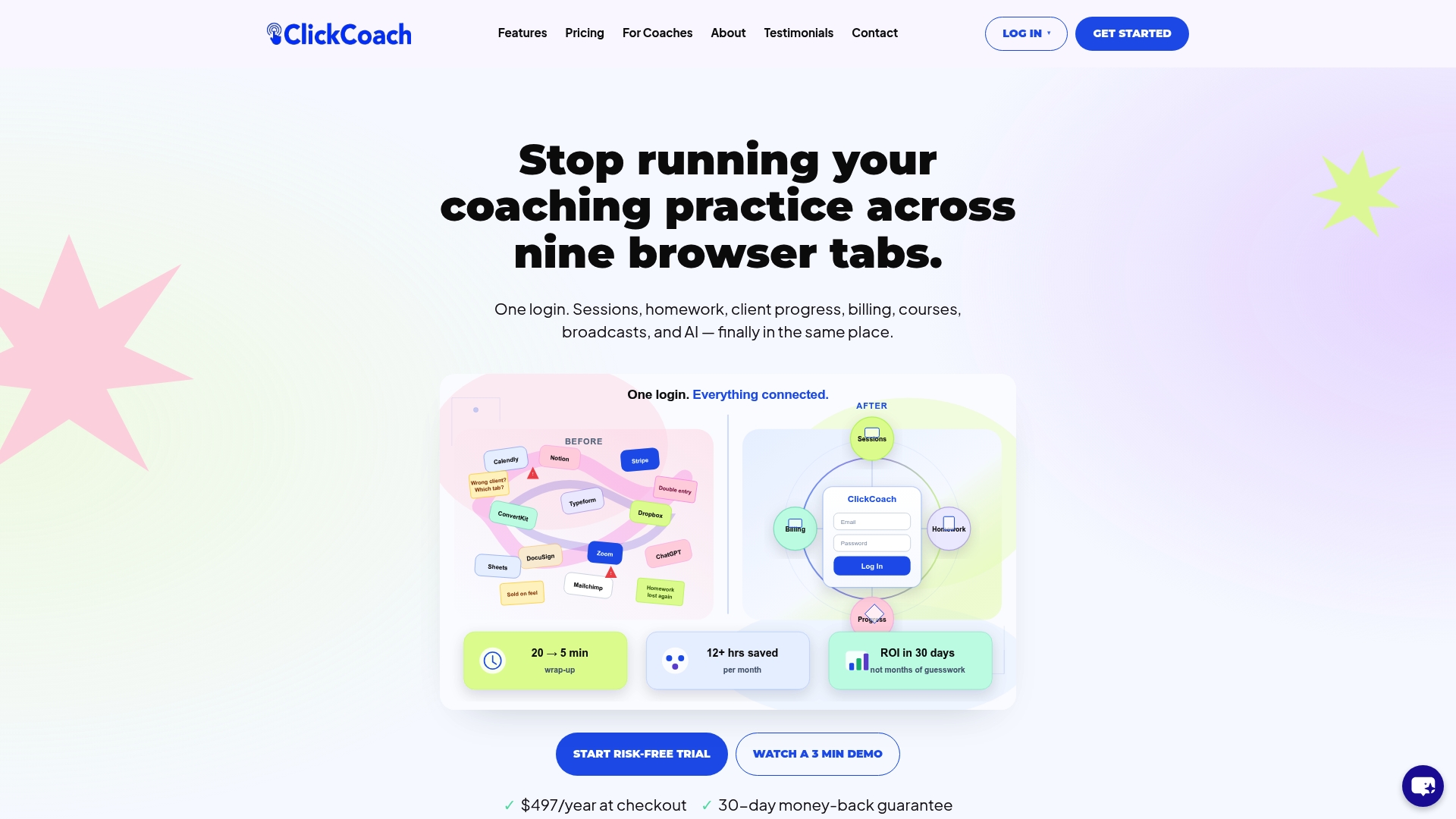
The platform centralizes client profiles, session history, homework assignments, and invoicing in one place. ClickCoach’s built-in AI assists with drafting session homework and tracking client progress, with workflows designed to support transparent data handling. Coaches using ClickCoach report saving up to 20 minutes per session on administrative tasks. That time goes back into the work that actually moves clients forward. If you are ready to build a more organized and compliant coaching practice, explore ClickCoach and see how the platform fits your workflow.
FAQ
What is client data management coaching?
Client data management coaching is the structured practice of collecting, organizing, securing, and using client information to improve coaching outcomes and practice efficiency. It covers compliance, session continuity, and relationship quality.
Do coaches need to comply with GDPR or HIPAA?
GDPR applies to coaches working with clients in the European Union, while HIPAA applies to health and wellness coaches in the United States handling protected health information. Both require encryption, consent documentation, and formal data retention policies.
How often should coaches review their client data policies?
Coaches should conduct confidentiality audits every quarter and formally review data retention policies every 6–12 months to stay compliant and catch security gaps.
Can coaches use AI tools with client data?
Yes, but coaches must obtain explicit client consent before any AI tool processes client information. The disclosure must cover encryption practices, anonymization methods, and the client’s right to opt out.
How does good data management increase referrals?
Coaches using formal data management systems report referral rates up to 4 times higher than coaches without systems. Organized records support the consistent, personalized service that clients recommend to others.